Introducing The Flower Project and the Floral Compost Activator
Katrina Wolff shares the story of The Flower Project, a global experiment in compost alchemy that blends biodynamic principles with nature communication.
Being a biodynamic gardener who doesn’t own land means, every now and then, it’s time to relocate.
Moving house often means it’s just not possible to bury compost preparations in the ground in autumn, to dig up in spring. It was Christmas 2024 when I realised my time on this particular piece of land was coming to an end, and I vividly remember the sadness and frustration at missing out on a season of prep-making.
Thanks to the suggestion of an American biodynamic teacher, I had a look at the work of Maye Bruce, who in the 1930s devised a way to use the so-called ‘biodynamic’ herbs and flowers to enhance her compost in remarkable ways.
What a surprise it was to discover that this method was so much more than a compromise, and that it would allow for my nature communication practice to find a new avenue; that the research would inspire a global community of composters; that I’d get invited to present the work at the upcoming International Biodynamic Research Conference in England, take part in a global project researching soil sovereignty from a more-than-human perspective, and contribute a section (‘C for Compost’) in a book Language of Soil, writing as a Nature Communicator.
2025 has been a wild ride.
It’s also proving to be a painful upgrade. I have not yet found a new home, and yet somehow, despite feeling physically ‘lost’ and questioning if I should even stay in New Zealand, I am also probably the most connected I’ve ever felt to the spirit of Blue Borage,1 the wishes of the soil, and the urgent need for widespread landscape healing using biodynamic tools, especially in urban centres.
There’s a new plant ally playing a very, very important role in this work – harakeke, often called New Zealand Flax. The study of Raranga (Māori weaving) was an extension of three years of Hua Parakore study, when I realised I wanted a more tactile way to learn about Māori culture, language, customs, and how my work could be a tool for decolonisation.
And so, it feels like Blue Borage has become, on the one hand, all about elevating the status of harakeke plants in the community and, on the other, about running experiments on all possible uses of the Floral Compost Activator method, using nature communication to talk with compost piles all over the world.
Thank you to the Blue Borage followers and customers who have pretty much funded this 2025 year of research and study and preparing to move house – I could not have done it without your help.
So, what is the Floral Compost Activator method?
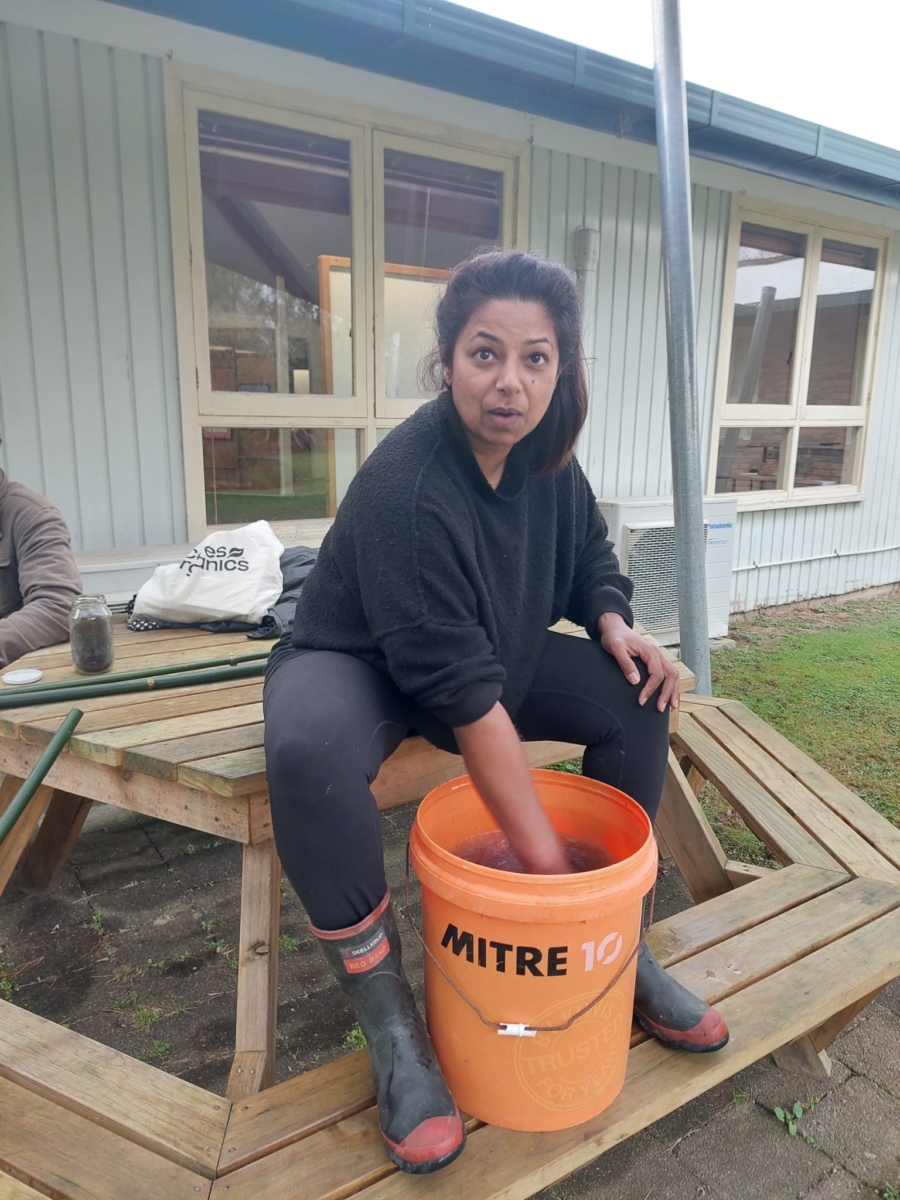
In short, it’s taking the same flowers and herbs we use for the biodynamic compost preparations, but instead of searching for stag bladders and sheep skulls, you just need a glass jar and a dab of honey. I recommend finding honey that has a relationship with your garden – it’s a chance to go and meet your local beekeepers. The bees have asked for us to be loving caretakers, and help free them from cold, transactional, often exploitative relationships.

The first batch I made was used in a particularly smelly batch of food scraps containing meat, fish, dairy, bread, citrus, onions – all the things we’re often told not to include in a home compost system. It was the middle of summer, I was low on greens for the compost, and I was tired from the endless watering of the garden (my garden hose didn’t work, so I was filling buckets of water from the kitchen sink.)
Odour fixed, with one application.
The next batch went into a hot compost pile built around a deceased chicken, which also got a bit stinky (again, I was lacking the optimal materials for a nice hot compost pile in summer). It was mid February, and I had about 30 jars of dried flowers and herbs, following Maye Bruce’s advice to experiment with more flowers than the handful recommended by Rudolf Steiner. I tuned in with the chicken compost in a nature communication session, asked what would help it decompose more easily, and was given a list of a dozen plants, including fennel, tansy, rose and lavender. I made up the mixture following Maye Bruce’s method, and within three hours of adding the Floral Compost Activator, the smell had vanished. Gone. Just like that.
Over and over again, the recipe has sped up small-scale composting and effectively dealt with odours, maggots, and fruit flies. It has even improved the speed of composting for my weaving scraps – if anyone ever tells you that it’s not possible to compost harakeke, please send them my way.
Where it’s working well:
- Mortality composting, like the near-miraculous odour reduction in a dead chicken trial.
- Stinky food scraps, both in cubic-metre hot compost and small-scale indoor composting using the Pacha Compost system, a small-scale composting unit made from unglazed terracotta.
- Maggot and fruit fly dispersal, as seen in the autumn batch of ‘peach pit’ compost.
- Worm farms, especially when adding meat, dairy, bread, onions, citrus. All odours have vanished, and the worms seem plumper and more vigorous.
- Seedlings fed with the Floral Compost Activator have shown noticeably stronger early winter growth.
- Humanure systems. I’ve used a variation of Maye’s recipe with the six basic biodynamic herbs: yarrow, chamomile, dandelion, valerian, nettle and oak bark, with added rose and lavender. I use this inside, both in the toilet bucket as well as in the cover material.
Where it’s not working:
I lost track of the number of flowers when I got to 50 different varieties, so it’s time to refine my labelling, drying and storage systems.
I don’t think it is anywhere near as effective as the traditional biodynamic compost preparations. The finished compost from green waste doesn’t break down as finely, and the sticks and logs from the finished compost don’t snap as easily as when I treat piles of woody material with Preparations 502-507. It comes close to looking like compost that’s had cow manure added, but it’s missing a magical, mystical, ‘heavenly’ feeling.
I picked the bulk of my flowers in summer, especially the valerian and chamomile, and made the mistake of storing the dried flowers in open glasses. I’m still harvesting yarrow, dandelion, nettle and oak in New Zealand winter, but worry that the valerian and chamomile may have lost a bit of their freshness. I have now switched to sealed containers in a cupboard that gets no direct light.
Next directions:
- Test the remedy as a seed bath, comparing it with CPP (Cow Pat Pit preparation)
- Begin formal rongoā studies to learn about indigenous Māori plants within a supported learning community.
Partial Conclusions (as at August 2025)
The research is ongoing, but my gut feeling is clear: the Floral Compost Activator is a really helpful tool. It’s ideal as a yummy treat for worm farms and seedlings, or as a quick fix for a particularly smelly batch of compost that doesn’t justify a full set of purchased biodynamic preparations.
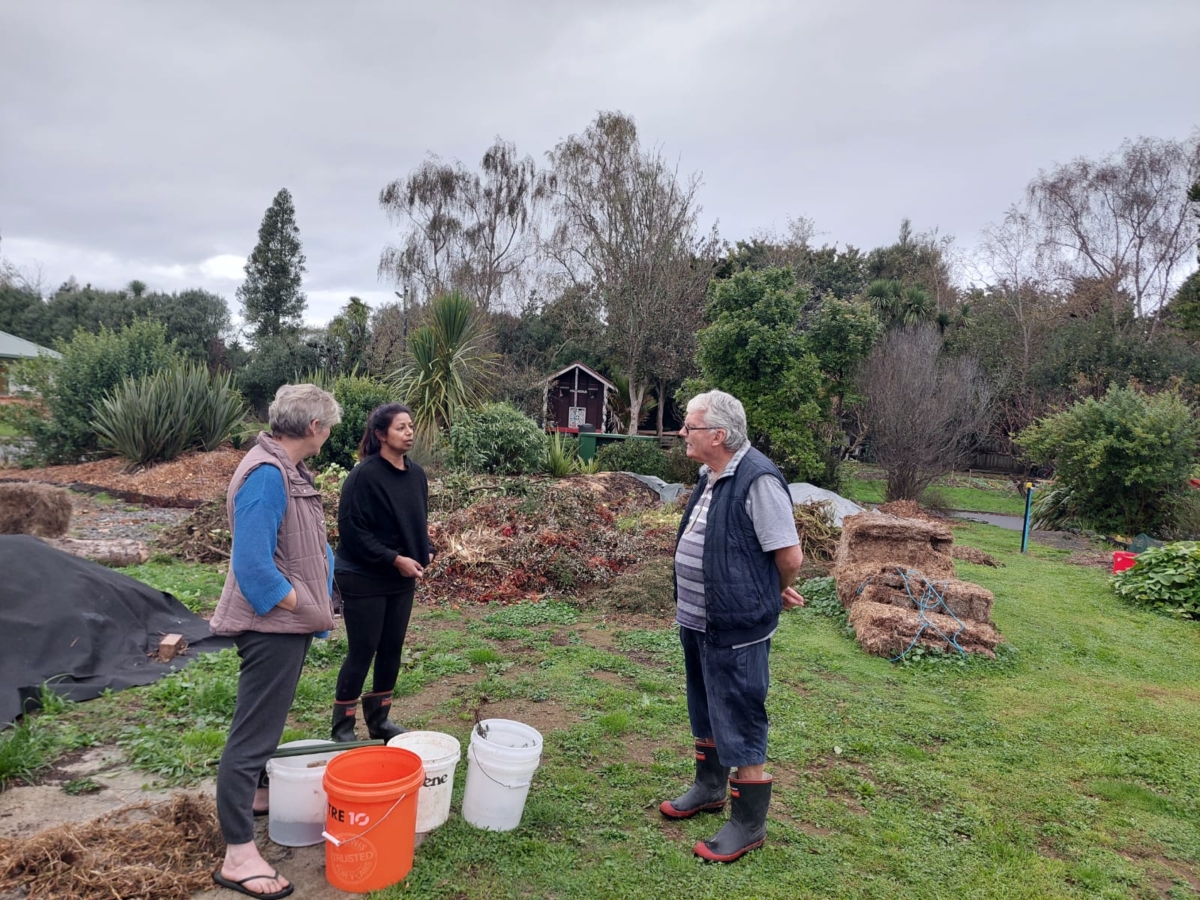
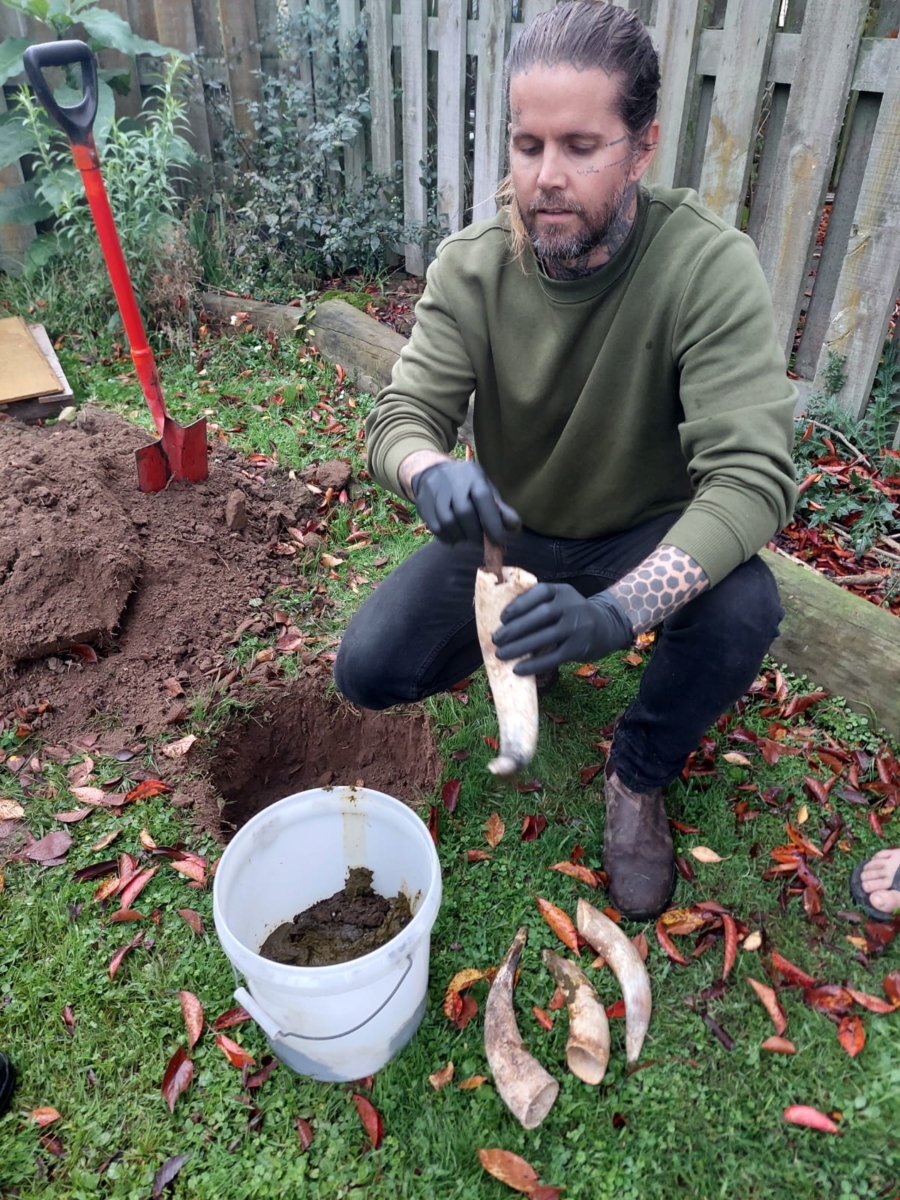
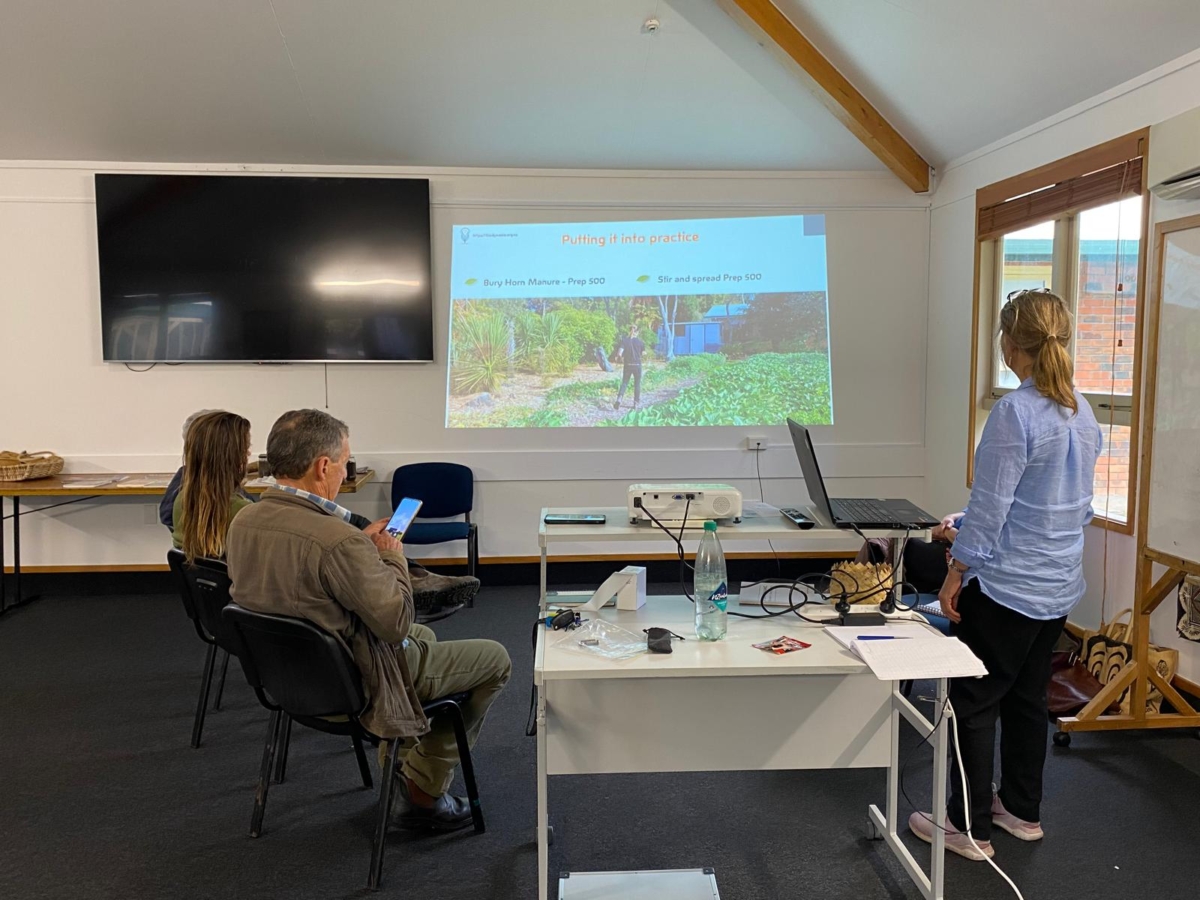
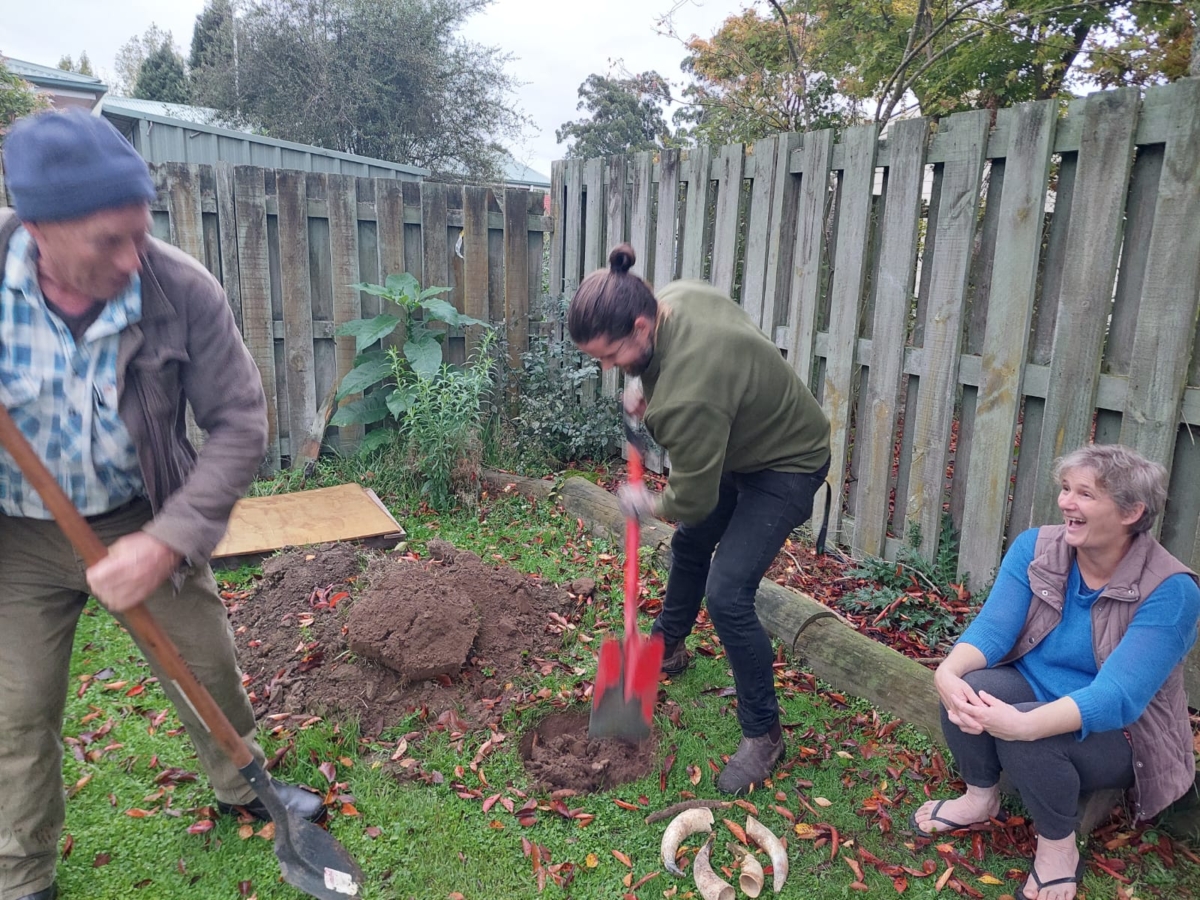
It’s also a great way of infusing each compost pile with the unique energy of a property, using a DIY treatment that can be added to a compost pile on a regular basis. See the picture below of me showing the method to students at Tipene St Stephen’s boarding school, south of Auckland in the Bombay Hills, on the day they installed their brand new Carbon Cycle Compost system.
Way back in January 2025, that very first batch of the activator was used on the summer food scraps from the brand new Tipene teachers, who were preparing to open the school after a closure of 20 years
There’s a similar ‘full circle’ moment at the International Biodynamic Research Conference, hosted by the Royal Agriculture University in Cirencester. Maye Bruce lived in Sapperton, a 90- minute walk from the conference. The anthroposophical agriculture movement refused to listen to Maye Bruce’s ideas in the 1930s, and I’m ever so curious to see if there’s a change of heart 90 years on. Is there more room now for inquiry, experimentation, and diversity?
Maye’s method pairs beautifully with biodynamics and also with nature communication. It invites us to work with flowers, herbs and tree bark in an intuitive way, and I believe every garden and farm will have its own signature blends uniquely suited to that place in each season.
My invitation to the New Zealand biodynamic community: grow more flowers, and more herbs. Let’s consciously incorporate them into our composting systems, not just for aesthetics, but as active co-creators in soil transformation.
I encourage anyone curious about this method to study Maye Bruce’s original text, Common Sense Compost Making, and join us at The Flower Project for shared experiments, weekly updates, seasonal reflections and global compost coaching via Zoom.

Katrina Wolff is a Compost Consultant, Nature Communicator, Weaver, and founder of Blue Borage, helping people, businesses and communities make exquisite compost. She is presented at the International Biodynamic Research Conference in September of 2026.
Click here to view Katrina’s instagram or view her work on Substack here.
This article was first published in the Spring/Summer 2025 edition of Harvests Magazine