The nitrate loading of the Canterbury aquifers has been in the news recently.
Peter Bacchus believes that this is where Bio Dynamic methods can help. In this article he explains that when used to its optimum capacity we can increase production and profit on a dairy farm, while greatly reducing any nitrate that may leech away.
There are two aspects to the issue of nitrate leeching, One is the chemistry side. In several places in the agricultural course Rudoph Steiner mentions calcium.
Nitrogen fertilizer is applied in its ammonium form but quickly oxidizes to the nitrate form. Add water or hydrogen and we have nitric acid that is very hard on soil biology and that which can not be taken up by plants need a free alkali to form a salt like calcium nitrate that is neutral and therefore stays longer in the soil. Calcium is the major alkali in a reasonably neutral soil so having adequate calcium in the soil is vital to give plants a longer period to take up the nitrate. Some soil scientist claim that for white clover to help most with converting nitrogen to its most useable form the pH should be 6.2 or closer to 7, a neutral soil. Other legumes may be different.
When making compost that is stronglyrecommended for pasture, to ensure adequate nitrogen, adding burned lime in small amounts is recommended. We need to note that 78% of the atmosphere is nitrogen. When the right soil biology is present the inert nitrogen of the air can be transformed into a form readily used by plants.
To ensure that the biology is dynamic there needs to be a generous amount of plant sugar being exuded by plants, while other soil conditions like moisture and temperature are adequate for their vigorous life. This means that photosynthesis has to work well and that requires good soil moisture as well as good light with adequate magnesium in the leaf of the plant.
In Biodynamic practice this includes the regular use of all the preparations including Horn Silica for the darker part of the year. This might be from early April to the end of October depending on soil moisture. I have seen up to double the refractometer reading in pasture sap that measures mostly plant sugars. Approximately one third of the sugar made each day is exuded through the roots to root feeding soil biology. They form the food source for others, which eventually gets to the Earth worms at level four. I have seen them cast a two centimeter continuous sheet over the whole pasture in as little as ninety days.
On another occasion I sprayed a paddock that had mature nitrogen patches including old dock plants with all the preparations in evening and with Horn Silica the next morning. Shortly after that milking cows spent a night there and the paddock looked as though a big mob of dry cows had been there for three days. The paddock was cleaned out, especially the nitrogen patches. That lead me to ask whether the horn silica had increased the quality of the protein to make it palatable.
https://biodynamic.org.nz/wp-content/uploads/2026/08/Blue-Pink-Green-Vibrant-Event-Announcement-Facebook-Post.png788940Biodynamichttps://biodynamic.org.nz/wp-content/uploads/2022/02/logo-for-web2022-colour2.pngBiodynamic2026-08-20 16:23:492026-08-20 16:26:03Nitrate Loading of Canterbury Aquifers – is there a biodynamic solution?
At BDNZ, we passionately believe in the practice of biodynamics and the incredibly beneficial affects the practices and preparations have on the garden, orchard, farm and vineyard. Biodynamics can be tailored to suit all types of properties and climates and we love to hear peoples biodynamic “success stories” and so it is with great delight, that we received the following review from Herb, on how Equisetum has been helping him and his team combat downy mildew.
“Our Climate has changed incredibly on Waiheke Island, we used to have a dry, Mediterranean Climate with dry summers, that has now become much more tropical with lots of summer rainfall. This has brought about much more disease pressure, particularly for powdery and lately more and more for downy mildew. Having discovered a couple of years ago the effect of Equisetum on downy mildew has been a bit of a miracle, and has saved our harvest more than once. The yellowing oil spots on the leaves at early onset of downy literally disappear and the leaves turn green again.
For our 4 Ha Vineyard we make a brew of 200 grams of Equisetum, slowly simmered for one hour in the big stock pot we share with the kitchen, than left to cool overnight. the next day we mix it with water and apply it, some times with a bit of CPP added. The pictures I included above are from our ” Thank you spray” to the Vineyard”
Thank you Herb, for sharing your positive results with Equisetum and your fantastic photos. If you’d like to learn more about Poderi Crisci vineyard, please click here
For non BDNZ members who would like to try using Equisetum aka Preparation 508, please click here to purchase (BDNZ members please sign into the members only section to make your purchase).
There is also an excellent article on the Goetheanum website, about how biodynamics effects the taste and vitality of wine, which you can read here.
https://biodynamic.org.nz/wp-content/uploads/2026/05/IMG-20260430-WA0006.jpg15362048Biodynamichttps://biodynamic.org.nz/wp-content/uploads/2022/02/logo-for-web2022-colour2.pngBiodynamic2026-05-11 12:20:102026-05-14 12:05:03Praise for Equisetum (Preparation 508)
Katrina Wolff shares the story of The Flower Project, a global experiment in compost alchemy that blends biodynamic principles with nature communication.
Being a biodynamic gardener who doesn’t own land means, every now and then, it’s time to relocate.
Moving house often means it’s just not possible to bury compost preparations in the ground in autumn, to dig up in spring. It was Christmas 2024 when I realised my time on this particular piece of land was coming to an end, and I vividly remember the sadness and frustration at missing out on a season of prep-making.
Thanks to the suggestion of an American biodynamic teacher, I had a look at the work of Maye Bruce, who in the 1930s devised a way to use the so-called ‘biodynamic’ herbs and flowers to enhance her compost in remarkable ways.
What a surprise it was to discover that this method was so much more than a compromise, and that it would allow for my nature communication practice to find a new avenue; that the research would inspire a global community of composters; that I’d get invited to present the work at the upcoming International Biodynamic Research Conference in England, take part in a global project researching soil sovereignty from a more-than-human perspective, and contribute a section (‘C for Compost’) in a book Language of Soil, writing as a Nature Communicator.
2025 has been a wild ride. It’s also proving to be a painful upgrade. I have not yet found a new home, and yet somehow, despite feeling physically ‘lost’ and questioning if I should even stay in New Zealand, I am also probably the most connected I’ve ever felt to the spirit of Blue Borage,1 the wishes of the soil, and the urgent need for widespread landscape healing using biodynamic tools, especially in urban centres.
There’s a new plant ally playing a very, very important role in this work – harakeke, often called New Zealand Flax. The study of Raranga (Māori weaving) was an extension of three years of Hua Parakore study, when I realised I wanted a more tactile way to learn about Māori culture, language, customs, and how my work could be a tool for decolonisation.
And so, it feels like Blue Borage has become, on the one hand, all about elevating the status of harakeke plants in the community and, on the other, about running experiments on all possible uses of the Floral Compost Activator method, using nature communication to talk with compost piles all over the world.
Thank you to the Blue Borage followers and customers who have pretty much funded this 2025 year of research and study and preparing to move house – I could not have done it without your help.
So, what is the Floral Compost Activator method?
In short, it’s taking the same flowers and herbs we use for the biodynamic compost preparations, but instead of searching for stag bladders and sheep skulls, you just need a glass jar and a dab of honey. I recommend finding honey that has a relationship with your garden – it’s a chance to go and meet your local beekeepers. The bees have asked for us to be loving caretakers, and help free them from cold, transactional, often exploitative relationships.
The first batch I made was used in a particularly smelly batch of food scraps containing meat, fish, dairy, bread, citrus, onions – all the things we’re often told not to include in a home compost system. It was the middle of summer, I was low on greens for the compost, and I was tired from the endless watering of the garden (my garden hose didn’t work, so I was filling buckets of water from the kitchen sink.)
Odour fixed, with one application.
The next batch went into a hot compost pile built around a deceased chicken, which also got a bit stinky (again, I was lacking the optimal materials for a nice hot compost pile in summer). It was mid February, and I had about 30 jars of dried flowers and herbs, following Maye Bruce’s advice to experiment with more flowers than the handful recommended by Rudolf Steiner. I tuned in with the chicken compost in a nature communication session, asked what would help it decompose more easily, and was given a list of a dozen plants, including fennel, tansy, rose and lavender. I made up the mixture following Maye Bruce’s method, and within three hours of adding the Floral Compost Activator, the smell had vanished. Gone. Just like that.
Over and over again, the recipe has sped up small-scale composting and effectively dealt with odours, maggots, and fruit flies. It has even improved the speed of composting for my weaving scraps – if anyone ever tells you that it’s not possible to compost harakeke, please send them my way.
Where it’s working well:
Mortality composting, like the near-miraculous odour reduction in a dead chicken trial.
Stinky food scraps, both in cubic-metre hot compost and small-scale indoor composting using the Pacha Compost system, a small-scale composting unit made from unglazed terracotta.
Maggot and fruit fly dispersal, as seen in the autumn batch of ‘peach pit’ compost.
Worm farms, especially when adding meat, dairy, bread, onions, citrus. All odours have vanished, and the worms seem plumper and more vigorous.
Seedlings fed with the Floral Compost Activator have shown noticeably stronger early winter growth.
Humanure systems. I’ve used a variation of Maye’s recipe with the six basic biodynamic herbs: yarrow, chamomile, dandelion, valerian, nettle and oak bark, with added rose and lavender. I use this inside, both in the toilet bucket as well as in the cover material.
Where it’s not working:
I lost track of the number of flowers when I got to 50 different varieties, so it’s time to refine my labelling, drying and storage systems.
I don’t think it is anywhere near as effective as the traditional biodynamic compost preparations. The finished compost from green waste doesn’t break down as finely, and the sticks and logs from the finished compost don’t snap as easily as when I treat piles of woody material with Preparations 502-507. It comes close to looking like compost that’s had cow manure added, but it’s missing a magical, mystical, ‘heavenly’ feeling.
I picked the bulk of my flowers in summer, especially the valerian and chamomile, and made the mistake of storing the dried flowers in open glasses. I’m still harvesting yarrow, dandelion, nettle and oak in New Zealand winter, but worry that the valerian and chamomile may have lost a bit of their freshness. I have now switched to sealed containers in a cupboard that gets no direct light.
Next directions:
Test the remedy as a seed bath, comparing it with CPP (Cow Pat Pit preparation)
Begin formal rongoā studies to learn about indigenous Māori plants within a supported learning community.
Partial Conclusions (as at August 2025)
The research is ongoing, but my gut feeling is clear: the Floral Compost Activator is a really helpful tool. It’s ideal as a yummy treat for worm farms and seedlings, or as a quick fix for a particularly smelly batch of compost that doesn’t justify a full set of purchased biodynamic preparations.
It’s also a great way of infusing each compost pile with the unique energy of a property, using a DIY treatment that can be added to a compost pile on a regular basis. See the picture below of me showing the method to students at Tipene St Stephen’s boarding school, south of Auckland in the Bombay Hills, on the day they installed their brand new Carbon Cycle Compost system.
Way back in January 2025, that very first batch of the activator was used on the summer food scraps from the brand new Tipene teachers, who were preparing to open the school after a closure of 20 years
There’s a similar ‘full circle’ moment at the International Biodynamic Research Conference, hosted by the Royal Agriculture University in Cirencester. Maye Bruce lived in Sapperton, a 90- minute walk from the conference. The anthroposophical agriculture movement refused to listen to Maye Bruce’s ideas in the 1930s, and I’m ever so curious to see if there’s a change of heart 90 years on. Is there more room now for inquiry, experimentation, and diversity?
Maye’s method pairs beautifully with biodynamics and also with nature communication. It invites us to work with flowers, herbs and tree bark in an intuitive way, and I believe every garden and farm will have its own signature blends uniquely suited to that place in each season.
My invitation to the New Zealand biodynamic community: grow more flowers, and more herbs. Let’s consciously incorporate them into our composting systems, not just for aesthetics, but as active co-creators in soil transformation.
I encourage anyone curious about this method to study Maye Bruce’s original text, Common Sense Compost Making, and join us at The Flower Projectfor shared experiments, weekly updates, seasonal reflections and global compost coaching via Zoom.
Katrina Wolff is a Compost Consultant, Nature Communicator, Weaver, and founder of Blue Borage, helping people, businesses and communities make exquisite compost. She is presented at the International Biodynamic Research Conference in September of 2026.
Click here to view Katrina’s instagram or view her work on Substack here.
This article was first published in the Spring/Summer 2025 edition of Harvests Magazine
https://biodynamic.org.nz/wp-content/uploads/2026/02/Screenshot-2026-02-17-at-11.02.09 AM.png4071037Biodynamichttps://biodynamic.org.nz/wp-content/uploads/2022/02/logo-for-web2022-colour2.pngBiodynamic2026-02-17 11:17:462026-05-27 15:01:32Introducing The Flower Project and the Floral Compost Activator
A Chinese immigrant takes naturally to biodynamics
Hongze Yao (known as Yao to friends) was born in a small region in Fujian Province. With a warm and humid maritime subtropical climate, agriculture in Putian has been very popular since the 1950s.
Jen Speedy tells the tale of transforming soil at Taikura Rudolf Steiner School in Hastings, using biodynamic practices.
Six years ago, our school grounds expanded with the purchase of the neighbouring property – a commercial four-story building surrounded by asphalt car parking areas. On two sides of the newly acquired grounds, edging the building and edging the street, were very sorry, pale, baked, unloved and lifeless strips of gardens supported by a couple of Acer negundo maple trees, a eucalypt and that thorny stalwart, the Eleagnus hedge.
On the third side sat an additional very large asphalt carpark. A contracted company ripped up the asphalt for us. On half the area, topsoil was smoothed out and grass seed blasted on – and presto, the existing playing field had been extended.
https://biodynamic.org.nz/wp-content/uploads/2022/07/Flowers.png678698Biodynamichttps://biodynamic.org.nz/wp-content/uploads/2022/02/logo-for-web2022-colour2.pngBiodynamic2022-07-05 11:25:332022-07-05 12:02:35Bringing Forgotten Soil To Life
Some innovative projects in Auckland are introducing healthy food-growing practices to new audiences. One of them is Katrina’s Kitchen Garden, an urban biodynamic farm operating out of West Auckland. Co-director Katrina Wolff tells their story.
https://biodynamic.org.nz/wp-content/uploads/2017/04/Backyard1.jpg362780Biodynamichttps://biodynamic.org.nz/wp-content/uploads/2022/02/logo-for-web2022-colour2.pngBiodynamic2022-03-24 11:52:322022-04-04 17:04:14An Amazing Year in the Greenhouse
Kaitlyn is 18 years old and is John Paul College’s environmental captain in Rotorua. She has a huge passion for growing nutrient rich food from seed and diverting waste from the landfill by making compost. She has recently become a member of Biodynamics New Zealand and shares with us her passion for gardening, sustainability and visions of what her future holds.
What interests me about Biodynamics is that the garden and every single part of that garden environment is looked at from a holistic viewpoint. This is very important, as nothing in nature is separate. They are all interconnected. Just like we are to Papatuanuku. Which is why I love how growers use ‘waste’ and plants from their land/garden to improve the health of their soil and therefore the health of the food they produce and the health of the ecosystem. I find this truly amazing because nowadays lots of growers depend on external inputs in order to grow food, which isn’t sustainable. I believe if we can return to biodynamic methods, then we will be able to even further slow down the greenhouse effect and find an even stronger connection to our environment.
https://biodynamic.org.nz/wp-content/uploads/2021/09/LAMB-Screen-Shot-2021-06-08-at-3.18.13-PM.png12962030Biodynamichttps://biodynamic.org.nz/wp-content/uploads/2022/02/logo-for-web2022-colour2.pngBiodynamic2021-09-20 09:46:312022-04-05 12:22:44The New Generation of Biodynamic Gardeners
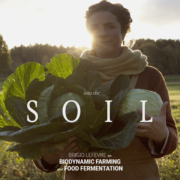
I had the wonderful opportunity to talk to Swedish film maker and podcaster Mattias Olssen about his documentary film ‘Into the Soil’ for the Spring issue of Harvests. He is the creator of the multimedia project called Campfire Stories, where he interviews people in his community pursuing sustainable and sometimes alternative lifestyles. In this film he documents the philosophical approach of the biodynamic farmer Brigid LeFevre, who grew up in a Camphill community and now runs a small biodynamic farm where she grows supplies to make some of the best Kimchi in Europe.
https://biodynamic.org.nz/wp-content/uploads/2021/09/BRADLEY-Soil-poster-small.png23621772Biodynamichttps://biodynamic.org.nz/wp-content/uploads/2022/02/logo-for-web2022-colour2.pngBiodynamic2021-09-10 15:49:172022-04-05 12:24:27Into the Soil: An interview with Mattias Olssen about biodynamics and film making.
Below is an excerpt from the Spring 2021 issue of Harvests Magazine, written by Rachael Ewings. In Harvests, we share biodynamic stories from around Aotearoa, New Zealand and beyond. To get your hands on a copy of Harvests – and loads of other perks – become a member of Biodynamics New Zealand.
https://biodynamic.org.nz/wp-content/uploads/2021/09/EWING-Screen-Shot-2021-06-10-at-1.04.24-PM.png11661174Biodynamichttps://biodynamic.org.nz/wp-content/uploads/2022/02/logo-for-web2022-colour2.pngBiodynamic2021-09-04 09:29:042022-08-22 21:28:54Biodynamics In Action at Ipuwai Farm