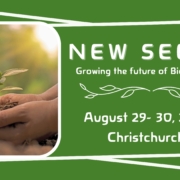
Gather with us for a fantastic weekend spotlighting the next generation of biodynamic practitioners and inspirational projects taking root across Aotearoa.
New Seeds: Growing the Future of Biodynamics, is a conference focused on weaving in fresh ideas with the foundational practices of biodynamics.
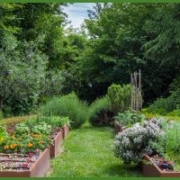
Spanning two inspiring days on August 29th and 30th, our conference will be held at the beautiful Christchurch Rudolf Steiner School. With its thoughtfully designed architecture and flourishing organic gardens, this unique venue offers the perfect setting to gather, learn and reconnect as a biodynamic community.
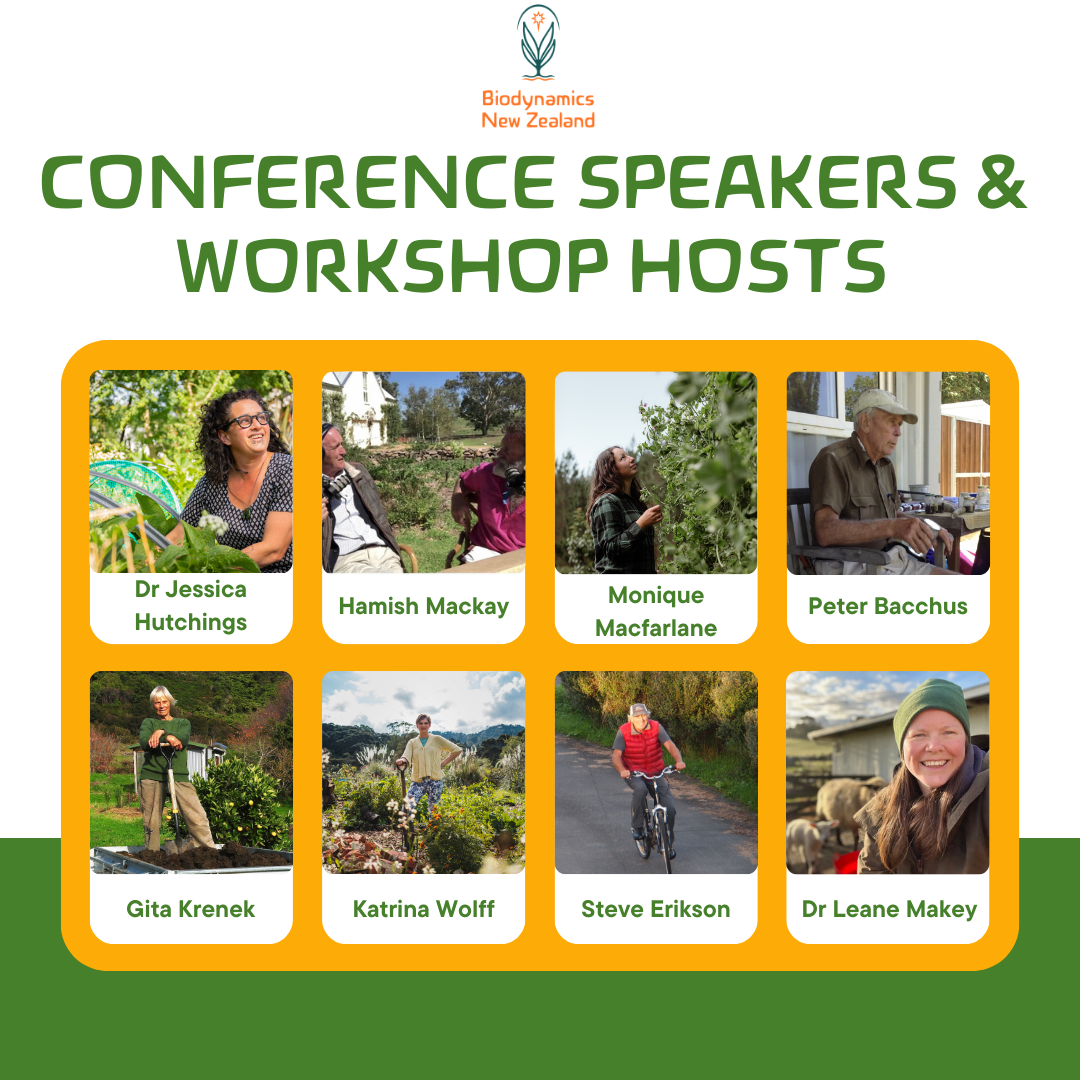
Come and be inspired by a powerful line-up of speakers including Dr Jessica Hutchings, Hamish Mackay, Monique Macfarlane and Dr Leane Makey.
Across the weekend, you’ll enjoy rich conversations, thought-provoking talks and meaningful discussions exploring the future of biodynamic practice.
Alongside the speaker programme, we’re offering a diverse range of hands-on workshops and practical activities, giving you the chance to expand your knowledge and try something new. This year’s workshop hosts include Katrina Wolff, Peter Bacchus, Gita Krenek, and Steve Erikson, ensuring a dynamic and engaging learning experience.
Of course, it’s not just about learning; enjoy delicious food and plenty of opportunities to connect with like-minded people who share your passion.
https://biodynamic.org.nz/wp-content/uploads/2025/11/Banner-scaled.jpg12802560Biodynamichttps://biodynamic.org.nz/wp-content/uploads/2022/02/logo-for-web2022-colour2.pngBiodynamic2026-02-05 10:56:022026-07-30 13:09:45New Seeds: Growing the Future of Biodynamics
Across Aotearoa New Zealand (and indeed, around the world), more and more people are asking the same questions:
How do we care for the land that feeds us?
How do we grow food that nourishes both people and place?
And how do we farm in ways that heal, rather than harm?
There is no single answer and here in New Zealand we are blessed to have access to a rich tapestry of approaches; each one similar but also shaped by different cultures, histories and ways of seeing the world.
Biodynamics, Organics, Regenerative Farming, Permaculture, Syntropic Agriculture and our very own indigenous organic certification system, Hua Parakore are all part of this story.
While they all have their unique language and practice, they ultimately share a deep respect for whenua, soil life, biodiversity and future generations.
Rather than being seen as competing systems, these approaches can be seen as complementary pathways, different lenses through which we learn how to live well with the land.
This article aims to look at each of these different approaches, so we can see the similarities and differences within each system and how we can weave them together within our own practices in the home garden or farm.
Biodynamics: Farming as a Living Whole
Biodynamic farming began in Europe in the 1920s through the work of Rudolf Steiner. At its heart is the idea that a farm is a living organism; an interconnected whole where soil, plants, animals, people and cosmic rhythms work together.
Biodynamic farmers use unique preparations made from herbs, minerals and manure to enliven the soil and are guided by lunar and seasonal calendars. Animals play a vital role in fertility and farms aim to be as self-sustaining as possible. GMOs, chemical sprays and synthetic fertilisers are not used within biodynamics. Certification for those who wish to pursue it, is overseen internationally by Demeter.
This approach speaks strongly to those who feel that farming/gardening, is not only a physical act, but also a spiritual relationship with life itself.
Organics: Clean Food, Healthy Soil
Organic agriculture grew out of concern over chemical-intensive farming in the mid-20th century. Its focus is clear and practical: grow food without synthetic fertilisers, pesticides, herbicides, GMOs, or other artificial inputs.
Like Biodynamics, Organic farmers build soil health through composting, crop rotation, green manures and biological pest control. The emphasis is on transparency and trust, supported by certification systems such as BioGro in New Zealand.
Organics is well known by the general consumer and provides a strong ethical baseline, protecting both consumers and ecosystems by keeping farming/gardening, clean and biologically grounded.
Regenerative Farming: Restoring What Has Been Lost
Regenerative farming moves beyond “doing less harm” and instead asks how agriculture can actively repair damaged ecosystems. Popularised by farmers like Joel Salatin at Polyface farm and soil scientists like Robert Rodale, this approach focuses on outcomes rather than strict rules.
Key practices include: minimal tillage, cover crops, diverse pasture species, holistic grazing and agroforestry. Soil is viewed as a living carbon sink and habitat and success is measured through improvements in soil health, water quality, biodiversity and resilience over time.
Regenerative farming is especially appealing to farmers who want flexibility, innovation and measurable ecological improvement.
Permaculture: Designing for Life
Permaculture was developed in the 1970s by Australians Bill Mollison and David Holmgren and it is just as much a design philosophy, as it is a farming system. It asks us to observe how natural ecosystems work and then design our food systems, homes and communities accordingly.
Permaculture emphasises system and function stacking, using tools like zones, sectors and pattern thinking to integrate food forests, polycultures, water harvesting, animals and people into resilient, low-input systems. While there is no regulatory certification, many practitioners complete a Permaculture Design Certificate (PDC).
Permacultures strength and appeal lie in its ability to bring everything together; land, people, ethics and long-term thinking.
Syntropic Agriculture: Partnering with Nature’s Succession
Syntropic agriculture was developed in Brazil by Ernst Götsch and is based on one powerful insight: nature moves towards greater complexity and abundance through succession.
Rather than fighting this process, syntropic farmers work with it. They plant dense, multi-layered systems of trees, shrubs and crops, continually pruning and cycling biomass back into the soil. These systems are self-fertilising, highly productive and importantly, rich in life, without the need for external inputs.
Syntropic agriculture is less about rules and more about understanding energy flow, cooperation, and regeneration through time. Here in New Zealand, we are lucky to have the team at PermaDynamics and their property is a fantastic example of how syntropic agriculture can work.
Hua Parakore: Indigenous Integrity and Guardianship
Hua Parakore is a Māori-led, Indigenous verification system unique to Aotearoa New Zealand. Rooted in mātauranga Māori, it places whakapapa (genealogy), wairua (spirit) and tikanga (values) at the centre of food production.
The land/whenua is not seen as a resource, but a living ancestor. Synthetic inputs are avoided, and food is grown in ways that uphold cultural, spiritual and ecological integrity. Verification is guided by Te Waka Kai Ora, the Māori organics authority.
Hua Parakore is deeply values-based, reflecting intergenerational responsibility, kaitiakitanga (guardianship) and respect for all life.
What These Approaches Share
Despite their differences, these systems have much in common:
Soil health is central to all; alive with microbes, fungi and organic matter.
Biodiversity is celebrated through polycultures, native species and habitat creation.
Closed-loop systems reduce waste by cycling nutrients back into the land.
Avoidance of synthetic chemicals protects ecosystems and human health.
Resilience and regeneration replace extractive, short-term thinking.
Community and knowledge sharing strengthen collective wellbeing.
All of these systems acknowledge that farming carries ethical responsibilities, in addition, both biodynamics and Hua Parakore share the belief that farming also carries with it a spiritual connection.
Different Emphases, Different Strengths
Where they differ is in how they frame their work. Some are more scientific and outcome-driven, while others are more spiritual or culturally grounded. Some focus on certification and inputs, whilst others focus on long-term ecosystem health and community togetherness. Timeframes can range from seasonal production cycles to intergenerational guardianship.
Not One Path, but Many Layers
Rather than choosing one system over another, it can be helpful to see them as layers of understanding that work together:
Spiritual and cultural layers are strengthened by Biodynamics and Hua Parakore.
Ecological and regenerative layers are supported by Regenerative Farming, Syntropics, Permaculture and Biodynamics.
Design and systems thinking is offered by Permaculture.
Ethical clarity and purity are reinforced by Organics and Hua Parakore.
Community focus is emphasised in Permaculture and Hua Parakore.
Together, they invite us into a richer relationship with land, one that honours science and spirit, tradition and innovation, people and place.
The beauty of all of these systems is that they can be combined to create a way of farming or gardening that is unique to each individual practitioner and the values they hold. We should not see each system as competition, but rather as approaches that all share a simple, powerful intention:
To leave the land healthier than we found it and to grow food that truly sustains life, both now and for generations to come.
https://biodynamic.org.nz/wp-content/uploads/2026/01/Brand-Email-Banner.jpg200600Biodynamichttps://biodynamic.org.nz/wp-content/uploads/2022/02/logo-for-web2022-colour2.pngBiodynamic2026-01-20 10:30:272026-01-20 10:37:33Caring for the Land, Together – A Gentle Overview of Sustainable and Regenerative Farming Approaches in Aotearoa New Zealand
As we enter the fourth week of Advent, we here at BDNZ, wanted to a share a simple reflection grounded in Rudolf Steiner’s insights and the spirit of our biodynamic work.
Rudolf Steiner often described Advent as a gentle descent inward; a time when we move from the outer world of activity toward the warm inner light that shines in each of us. By the fourth week, this light is ready to be kindled fully, and as the focus turns to the human and angelic realms, we begin to sense the approach of the love, peace and renewal that Christmas brings.
Just as our farms, properties and gardens depend on the inner attitude we bring to them, the focus of week four invites us to cultivate inner warmth, gratitude and conscious presence. It is in this focus that our hearts become the vessel for light, helping us to recognise the spark of the divine within ourselves and within everyone we meet.
Here are a few ideas you can bring into your home or farm this week:
Light a candle with earth-connection: When you light your evening candle, take a moment to feel Papatūānuku in her high-summer fullness. You might like to hold in your mind the ripening fields, the humming compost, the buzzing life in soil and fields and the vibrant, expansive forces at work above and below the surface.
Create a seasonal nature table: Add a simple natural item each day this week: a smooth stone, a handful of soil from the garden, a sprig of flowers, or a seed. These small offerings help us to feel the link between inner light and the life of the Earth.
Carry out an act of care: Steiner reminded us that outer deeds support inner development. This week you might like to choose to carry out a small gesture of kindness each day. Some ideas include: sweeping a threshold, tending animals with extra mindfulness, blessing your compost, or offering warm appreciation to someone working alongside you.
Attune to the rhythms of summer: Step outside for a quiet moment and sense the fullness of the season, notice the long light, the hum of insects, the warmth radiating from soil and leaf. Appreciate how the land breathes in a different way during summer: expansive, energetic and full of life. Let this remind you that Advent is not only an inner journey, but one lived in harmony with the natural world’s own rhythms.
Soften and Soothe the Summer Evenings Even in this bright, lively and often busy season, summer evenings can offer us the opportunity to slow down. As the light lengthens and softens, try creating a simple evening ritual. You might like to string up some fairy lights, sing or listen to calming songs, or read a favourite story. Activities such as these, helps to cultivate a sense of peace and anticipation within the household.
As we move toward Christmas and the turning of the year, may this fourth week fill your home, land and community with warmth, quiet strength and renewed connection to the living earth.
We hope that you have enjoyed moving through these weeks of Advent with us and we wish you a peaceful and joyful Christmas.
https://biodynamic.org.nz/wp-content/uploads/2026/01/Pink-and-Green-Illustrated-Christian-Advent-Instagram-Post-copy-2.jpg13501080Biodynamichttps://biodynamic.org.nz/wp-content/uploads/2022/02/logo-for-web2022-colour2.pngBiodynamic2026-01-05 15:07:462026-01-05 15:07:47Journey into Advent – Week 4
As we enter the third week of Advent, the BDNZ council wanted to share a small reflection inspired by Rudolf Steiner’s picture of this sacred season. In the anthroposophical tradition, each week of Advent helps us turn our attention to a different layer of creation.
After our quiet contemplation of the mineral world in week one and our connection with plant life in week two, this third week invites us to awaken our hearts to the animal realm.
In biodynamics, we recognise animals as essential partners in the farm organism (or on a smaller scale, the home and garden). Their presence brings vitality, rhythm and an enlivening, soul-bearing quality to the land. This week offers us a chance not only to appreciate their contribution outwardly, but also to cultivate inwardly the qualities they mirror for us: attentiveness, courage, trust, and warmth of heart.
Here are a few gentle ways to bring this week’s theme into daily life:
Light the third Advent candle with gratitude for the animal realm: As the flame is kindled, hold in mind the animals who support the health of our farms and gardens; those who enrich our soil, those who offer nourishment, and those who simply grace our surroundings with their presence.
Offer mindful care to animals nearby: This might mean an extra-attentive moment with your own animals, preparing something special for them, or simply observing their gestures and movements. If you don’t tend animals yourself, consider feeding wild birds or acknowledging the unseen creatures who share your land.
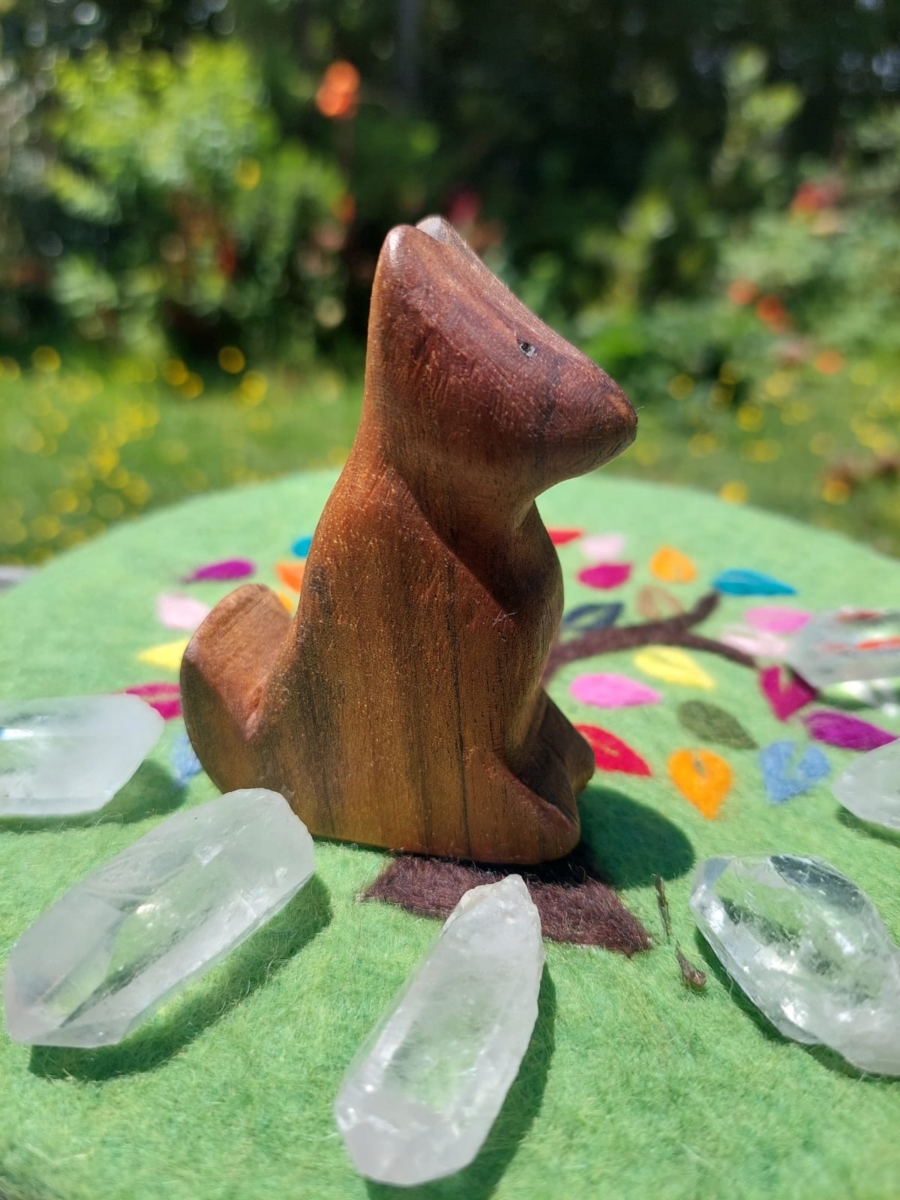
Add animal figures to your seasonal table or Advent garden: Handmade wool animals, carved figures, or even simple stones placed in animal shapes can express the warmth of this week. This is especially meaningful if you include animals connected to biodynamic farms: cows, bees, chickens, goats, or working horses.
Bring the farm organism into meditation: Take a few minutes to picture the harmony of the farm as a living whole, with each animal playing its part. You might reflect on what qualities you feel these animals embody and how you can cultivate those qualities within yourself.
Enjoy a story or moment of stillness that honours animals: A quiet reading or even time spent observing the night sky in silence can help anchor the mood of this week. Advent reminds us that inner stillness nurtures outward service.
If you would like to dive deeper into the ideas of Advent, please check out this link to The Josephine Porter Institute over on Substack.
May this week bring warmth to your heart, renewal to your home, and a deeper appreciation for the animals who help weave life and vitality into our world,
https://biodynamic.org.nz/wp-content/uploads/2025/12/Pink-and-Green-Illustrated-Christian-Advent-Instagram-Post-copy.jpg13501080Biodynamichttps://biodynamic.org.nz/wp-content/uploads/2022/02/logo-for-web2022-colour2.pngBiodynamic2025-12-15 15:45:432025-12-15 15:45:45Journey into Advent – week 3
On August 29th and 30th, 2026, Biodynamics New Zealand will bring together, fresh energy, bold ideas and inspiring voices from across Aotearoa for our Biodynamic Conference – New Seeds: Growing the future of Biodynamics.
The conference will be held at the Christchurch Rudolf Steiner School (19 Ombersley Terrace, Opawa, Christchurch), this will be the perfect venue to shine a spotlight on the next generation; the passionate young practitioners and projects shaping the future of biodynamics in our country. We are currently working through finalising speakers and workshop options, but rest assured this will be a vibrant conference that you don’t want to miss!
More information, including accomodation guide and ticket options will be coming to the website and a future footnote soon, but for now please do save the date, we would love to see you there!
If you are interested in becoming a valued sponsor of the 2026 conference, please check out the Sponsorship Package PDF
https://biodynamic.org.nz/wp-content/uploads/2025/11/Banner-scaled.jpg12802560Biodynamichttps://biodynamic.org.nz/wp-content/uploads/2022/02/logo-for-web2022-colour2.pngBiodynamic2025-11-27 12:34:372025-11-27 12:34:38New Seeds: Growing the Future of Biodynamics
On 15 March Titirangi Rudolf Steiner school teachers hosted a workshop that focussed on biodynamic gardening principles and how they can be practically applied in school and home gardens; preparing and eating nutritious vegetables and their health benefits.
Diane de Saint Quentin greeted 14 participants warmly and guided them on a tour of several productive gardens that harmoniously blend into extensive bush clad school grounds. “Have you ever wondered how some gardens manage to flourish even in the face of challenging conditions? she asks. As we wander through the gardens, Diane emphasises the art of observation and the importance of understanding nature as a whole ecosystem. Discussions spark among participants:
· Could these holistic methods regenerate even the most depleted soils?
· How might these principles be applied to urban home plots and container gardening?
The answers begin to reveal themselves as the group explores the orchard and the Ngahere (bush kindergarten) garden beds. The teachers and parents speak to the land’s resilience and their commitment to learning about biodynamic practices. Together, they navigate challenges such as dry summer heat, limited water, and bush terrain. These spaces prove vital for children, fostering connection to nature, inspiring curiosity, and cultivating stewardship. Attendees begin to reflect: What does it truly mean to nurture the land that sustains us? We see how biodynamics has built fertile soil and discuss how the soil and plants could be further improved such as applying preparation 501 to balance the growth from preparation 500 application.
Next, Gill Bacchus invites participants to look beyond the soil – to their relationship to plants and their food. Drawing inspiration from Rudolf Steiner’s teachings, she highlights the profound connection between plant vitality and human well-being. “What does the flavour of a tomato reveal about its nutritional life force?” she asks, offering both supermarket and biodynamic tomatoes for tasting. The contrast is striking: the biodynamic tomatoes radiate vibrancy, embodying the care and holistic practices invested in their growth. She discusses how formative forces enhanced by a biodynamic system increase plant vitality and stimulate our physical, soul and spiritual health.
As midday arrives, the enticing aroma from the outdoor kitchen draws everyone near. Kevin Helas, founder of The Wholefood Kitchen, greets the group with culinary wisdom and a simmering pot of stock. “Simple ingredients,” he explains, “yield the richest meals when treated with care and creativity.” Sharing his macrobiotic expertise, Kevin demonstrates how seasonal, foraged produce like nettle and potatoes served with sourdough bread can be transformed into nutrient-dense soup and one-pot meals bursting with flavour. The act of sharing food became- a moment to savour not just the kai but also the deep connections – to nature, to ourselves, and to the life-sustaining cycles that surround us. Kevin introduces the Māori concept of kotahitanga (unity), emphasising the profound bond between people, the whenua (land), and its abundant bounty. In this shared tasting, kai becomes an expression of gratitude and celebration, woven into a tapestry of holistic connection.
As the workshop draws to a close, teachers meet with Gill and Diane to continue their good work of embed biodynamic principles within the school. Plans emerge for more compost-making sessions and further application of biodynamic preparations.
https://biodynamic.org.nz/wp-content/uploads/2025/05/Four-Image-Winter-Landscapes-Email-Header.jpg200600Biodynamichttps://biodynamic.org.nz/wp-content/uploads/2022/02/logo-for-web2022-colour2.pngBiodynamic2025-05-13 11:39:182025-05-13 11:39:20The Biodynamic Journey: From Garden to Plate workshop
The team at Biodynamics New Zealand have been busy behind the scenes creating an exciting workshop “Practical Biodynamics” – aimed at introducing biodynamics to the keen gardener, this workshop covers the main principles and practices, whilst you learn the simple steps needed to get started with biodynamics in your own gardens and properties.
With interest in organic produce and growing methods, continue to gain popularity, biodynamics offers a holistic approach to growing which can enhance any organic or regenerative growing system. Biodynamics is unique, in that, it focuses on working with natures rhythms and uses the biodynamic ‘preparations’, 9 soil remedies made from plants and minerals, to create soil fertility and thriving balanced ecosystems.
Learning new concepts and ways of doing things can often feel overwhelming for those new to biodynamics, this is where the Practical Biodynamics workshop comes in, as it is a fun way to connect with like minded people, learn from a biodynamic practitioner, be introduced to the biodynamic approach and also provides a space for you to ask all your burning biodynamic questions!
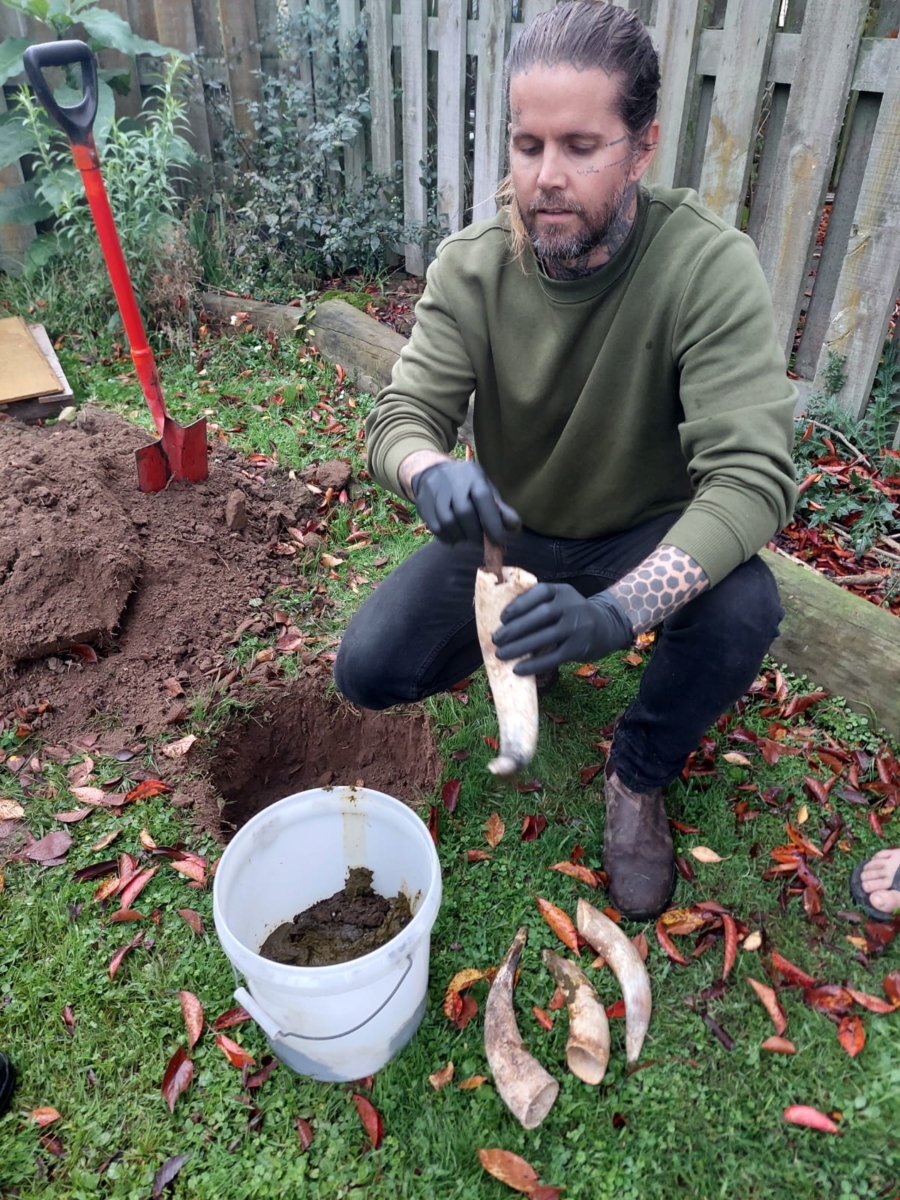
Taught by Bridget Henderson a biodynamic practitioner, educator and BDNZ council member, our first Practical Biodynamics workshop was held on Sunday 27th April, 2025 at Ethos Garden.
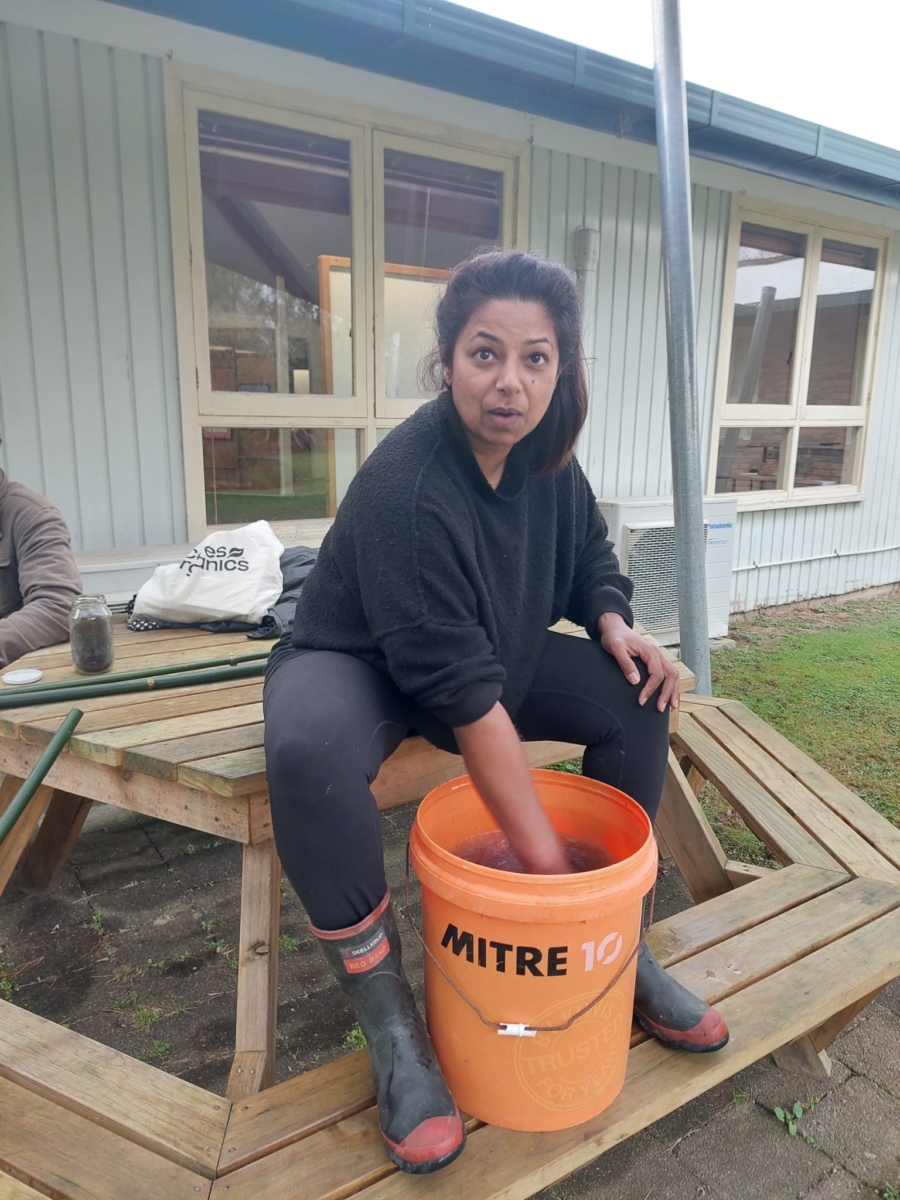
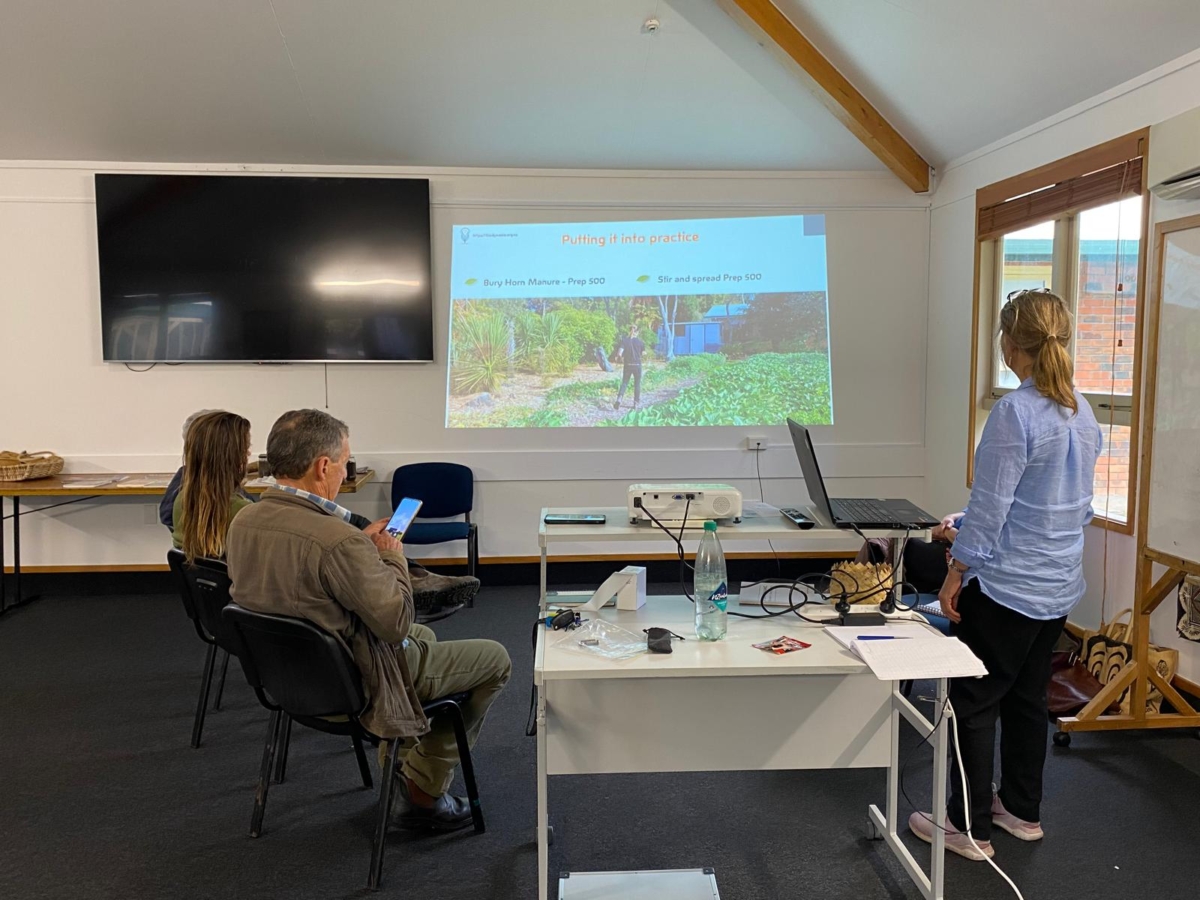
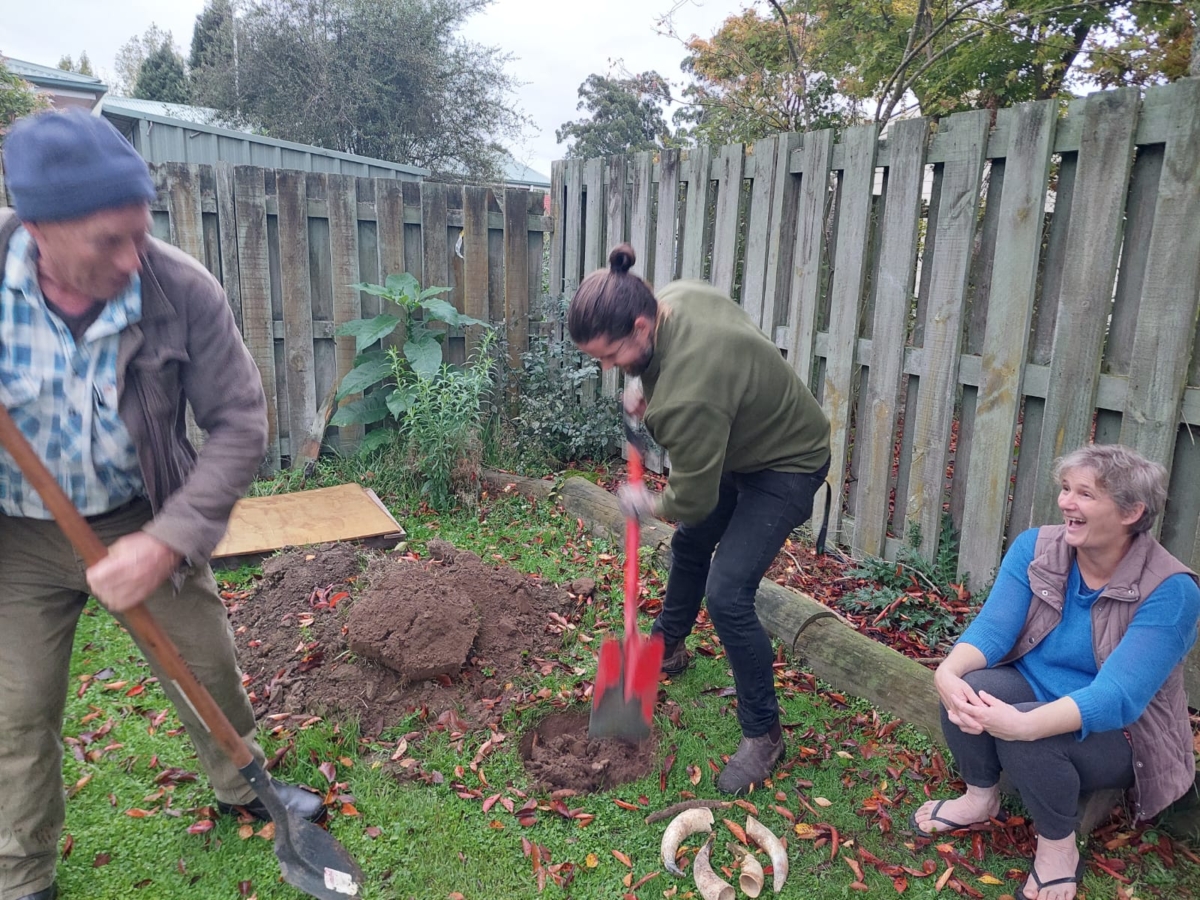
The day started with a presentation on the main concepts found in biodynamics and then carried on with two hands on activities: burying biodynamic preparation 500 in the ground and spreading it over the Ethos garden.
Participants were also encouraged to bring an empty 2-4 L container so they could take some preparation 500 home to use on own garden or property. We are so pleased to report that the feedback from participants was extremely positive!
A big thank you to Ethos Garden for providing such a wonderful space to host our workshop in.
BDNZ will be hosting more Practical Biodynamics workshops over the next few months, if you are keen to learn more or to attend one, please keep an eye on the BDNZ facebook page as we will upload all the details of the event- including location and ticket details, we hope to see you at our next Practical Biodynamics workshop!
https://biodynamic.org.nz/wp-content/uploads/2025/05/a0bb1d6e-3e7d-4327-a26e-a6388fb3bded.jpg20481536Biodynamichttps://biodynamic.org.nz/wp-content/uploads/2022/02/logo-for-web2022-colour2.pngBiodynamic2025-05-06 15:05:082025-05-06 15:11:28Practical Biodynamics – an exciting new workshop
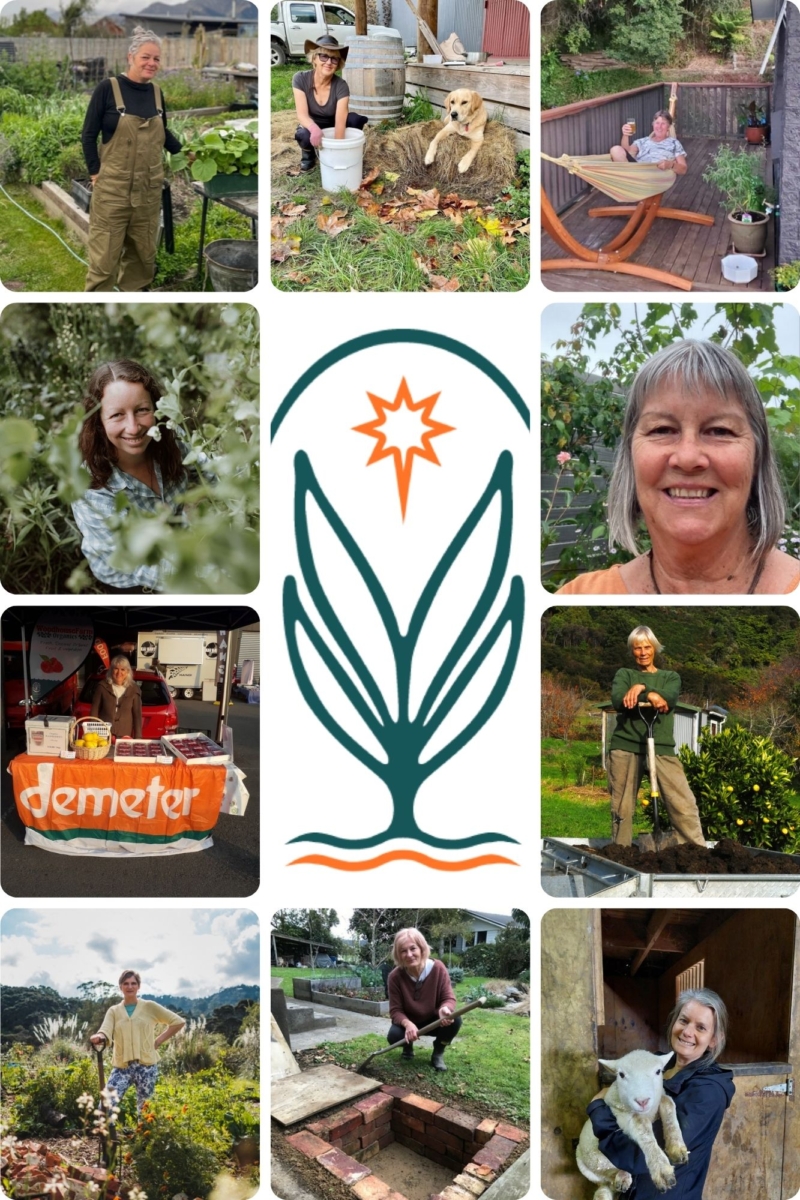
It was recently International women’s day on March 8th; and this year we wanted to celebrate by spotlighting a few of the fabulous women we have practicing Biodynamics here in Aotearoa.
From home gardeners, to keen writers and educators, to biodynamic based businesses; these women are out in their communities and are sharing their knowledge and passion for biodynamics and we think that deserves to be celebrated this International Women’s Day.
Of course there are many women out there in our communities doing incredible work to bring Biodynamics to their family, friends and communities (we would have loved to have shone a spotlight on you all) ….we applaud each and every one of you!
Please read on to learn more about each of the women we were able to feature in our “Women in Biodynamics” social media posts, for International Women’s Day and be sure to check out the links they have shared, so that you can further learn from them and support the work they do.
Katrina Wolff:
Katrina has been mesmerised by biodynamic gardening since discovering it in 2009 when her two children were at the Titirangi Rudolf Steiner School. She blended her hobby of gardening with other anthroposophical studies until she started Blue Borage in 2018 with the hopes of helping bring biodynamic methods (especially composting) into mainstream gardening and urban waste management practices.
She’s in the 2025 ‘top 50 women in food and drink’ with Cuisine Magazine, and in the ‘Next 95’ with the Sustainable Business Network. Her current focus is exploring how the plants used in the biodynamic compost preparations can be used to make a simple floral compost activator, following the work of Maye Bruce (1879-1964), you can listen to her talk about this with Kate Heming Panchal from the JPI Institute on YouTube here: https://youtu.be/bxxMrsqvry4?si=jeTNbd2XGroFP7bQ
Katrina’s often out in the community teaching composting workshops, and is the garden coach for Ceres Organics in Auckland. Her wide range of online courses are designed to help beginners find ways for biodynamics to make sense in their home, workplace, school and community. Look out for a new series soon on ‘Closing the Loop: the Art of Composting’
Please follow on LinkedIn, Instagram and YouTube for updates, or sign up for her weekly emails to see the latest offerings from Blue Borage.
Gita shares: “My biodynamic journey began in 1979 when my husband and I took over a sheep farm in North Canterbury and converted it to biodynamics. Over a few years, we introduced cattle and grain growing into the mix, and built a millhouse so we could start milling our grain and selling to private customers and shops. Twenty five years later it was time to hand over to our son, and I retired to Golden Bay (Top of the South) where I take care of a large vegetable garden, some fruit trees, and a couple of livestock. I also give occasional workshops on biodynamics, and have written a small book on the biodynamic preparations.”
Please keep an eye on the BDNZ web shop for Gitas booklets.
Joanne Turner:
Joanne shares this about her biodynamic journey, “Twenty something years ago, Greg and I moved to our little property and we wanted it to be run organically from the day we arrived. Greg was interested in biodynamics and I was happy with organics, so it seemed a good fit to be certified with Demeter. During the first few years Greg did all the preparation work and I did all the paperwork. As I was working fulltime on the property I would be making compost heaps during the week, but Greg wouldn’t get round to adding the preparations until the weekend. I decided it was time I took over that task. I also used to help with the stirring of preparation 500 and 501 but not the application. My thinking of this also changed and I now help with the application. I felt that I was not fully being a part of the farm and needed to be involved with the preparation work. It’s a wonderful feeling to be using the preparations and to feel connected to the organism that is Woodhouse Farm Organics. I still do all the paperwork.”
Su Hoskin has spent two decades practicing biodynamic farming principles on a mixed farm, vineyards and on her home gardens and allotment. She is a trustee and active member of The Hawea Food Forest and community gardens and Co-hosts the Wanaka Death Café where her affinity is advocating for environmentally sound burial practices and a more holistic approach to end of life matters.
Her training at Taruna, in 2005 gained her a certificate in Applied Organics and Biodynamics. She later went on to help facilitate the same course in her own region, Central Otago in the South Island.
Between 2015 and 2018, She completed a term on the New Zealand Biodynamic Associations Council, Education Coordinator and was a trustee on the Kete Ora Trust for many years.
Jan has this to share about her journey into biodynamics, “I was introduced to biodynamics 25 years ago when our children joined the Tauranga Rudolf Steiner kindergarten. Biodynamics so resonated with me and my learning journey with biodynamics began. I practiced biodynamics developing big gardens with lots of fruit trees as we moved properties a few times. I completed the Taruna Certificate of Applied Organics & Biodynamics in 2009 with intentions of bigger things. Wherever I have resided, I have enjoyed connecting with local BD groups and I enjoy organising local get togethers for a BD 500 stir or CPP making etc. I am a co-opted member of the BD Council learning in the ins out outs of keeping the BD Association thriving. I have recently taken on the Biodynamic Preparation Dispatch Role and library service, so If you are in the Kapiti Coast or Horowhenua area, keep an eye out in the footnote for a get together at my place to open a few library books.”
Monique Macfarlane:
As a holistic food systems facilitator, Monique Macfarlane of Natural Wisdom teaches a variety of workshops within biodynamics, spiritual gardening and planting by the moon. She has spent time growing in many different climatic regions throughout New Zealand, and produces an accessible monthly biodynamic calendar with Soil & Health and Biodynamics NZ. Her heartfelt passion for food, localisation, and thriving nature is the foundation of her incredible offerings – and finds her greatest joy in helping people back to the land, and themselves.
Monique has also just recently returned from the Goetheanum in Switzerland, where she presented a keynote lecture ‘Feeling the Earth as a Living Being’ with Agriculture Section co-leader Eduardo Rincon at Agriculture Conference 2025. Weaving anthroposophy and biodynamics closer together is her current passion, breathing a deeper life into our lands and our practice.
Jan on how she came to biodynamics, “A chance meeting and visit( 20 something years ago) from Peter Proctor and Rachel Pomeroy “opened my eyes” to biodynamics.
Peter said “Don’t let the perfect get in the way, just do it!” It took a little more time!
I completed the Certificate in Applied Organics and Biodynamics through Taruna and then with the enthusiasm of our vigneron, Jeremy Hyland, have been using biodynamic principles in the vineyard since 2018.
We now make all our own preps (often with other members of the local biodynamic community) and our vineyard and wines are showing the benefits.
Peter was right!!”
Bridget Henderson:
Bridget learnt all about Biodynamics while living and working on Shelly Beach Farm, mentored by John Pearce. She continues to practice and promote BD and is currently a BDNZ Councillor. Bridget is also actively involved with Organic Farm NZ, as regional chair and auditor, as well asTutor of NZ Certificate in Sustainable Primary Production. Bridget believes in taking every chance to share the BD magic!
Christine Moginie:
Christine Moginie’s love of Nature, Colour and Form, has lead her on a long destiny journey through urban organic gardening and rural lifestyle life in NZ and Australia.
Art, artistic therapy, storytelling, biography counselling, teaching adults and children, meditation, and biodynamics all melded together through studies in Anthroposophy since 1983.
Christine’s businesses “Conversations in Colour Artistic Psychotherapy” and Vortex Biodynamic Gardening Workshops and Consultation, combined with motherhood, and a love of learning, led her to join the BDNZ Council in 2020, and the role of Chair since 2023. Biodynamic preparations as medicines for the Earth .If you would like to connect with Christine and her work we encourage you to follow her @vortexbiodynamics
Jane Cumberworth:
Jane is active stirring 500 twice a year since being involved in Beehive gardens Hastings 1980s . She introduced children to 500 stirring at schools too: Hastings 1986, Welcome Bay Waldorf school, 1990s and Motueka Steiner School,2004 to 2016. Now Jane is involved with groups who organise stirs for the school’s land care group in Robinson Road, Motueka, as well as a group who do 500 stirring and 501 for home gardens.
https://biodynamic.org.nz/wp-content/uploads/2022/02/logo-for-web2022-colour2.png00Biodynamichttps://biodynamic.org.nz/wp-content/uploads/2022/02/logo-for-web2022-colour2.pngBiodynamic2025-03-10 17:21:272025-03-10 17:22:05Women in Biodynamics – Celebrating International Women’s Day
On a ‘descending root day’ the North Auckland, Land Based Training: Sustainable Primary Production students gathered at Shelly Beach Farm to dig up last year’s cow horns and spread 500 on the pasture. By all accounts it was a great social event.
Bridget Henderson has shared with us some fantastic photos of the students in action and the following observation;
“When the horns were laid down we buried some with openings facing down and some lying on their sides. Upon digging up, the ones facing down had not turned as well as the ones on their sides.. interesting!”
We would like to thank Bridget for sharing with us these fabulous images – its great to see biodynamics in action!
If you have any images and stories of events you have attended around New Zealand, we would love to hear from you and feature your event in our monthly members newsletter, or here on the blog.
Please email secretary@biodynamic.org.nz to share your stories and images.
https://biodynamic.org.nz/wp-content/uploads/2024/11/28d8986a-08f0-49af-8645-2460b3485f75.jpg20481536Biodynamichttps://biodynamic.org.nz/wp-content/uploads/2022/02/logo-for-web2022-colour2.pngBiodynamic2024-11-21 16:26:342024-11-21 16:46:34Land Based Primary Production Students in Action
Spring Equinox inches closer with the usual August snow and frosts one day and clear sunny warm days the next; encouraging the bulbs and fruit tree buds towards blossoming… Spring is on its way!
We are now heading into one of the busiest times in the Biodynamic year. It is a last opportunity to prune fruit trees and vines, apply tree paste, spread out compost and CPP to stabilise the Spring growth forces. Its also time to sow seeds for Spring and Summer planting, prepare to dig up the Horn Manure 500 horns and stir and spray Horn Silica 501, as bud burst occurs on fruiting plants.
To help you with your planning some key dates are:
September 3rd with ascending new moon opposition Saturn in Leo, in front of Sun sign Leo, for seed sowing, or spraying Horn Silica 501 if you have fruit trees and have already put out several lots of Horn manure 500.
The Sun moves in front of the Virgin, just into the early morning of the 18th September with a Perigee Full Moon Lunar Eclipse that day, and a Node on the 19th. Consequently it might be best to either dig up your BD500 horns, or stir 500 on Sunday 15th September, or wait until the 22nd/23rd/24th September and join the crowds!
100 Years Spring Equinox Countrywide Stir Sunday 22nd September 3pm! With Spring Equinox not far off, Biodynamics New Zealand invites you to gather together with friends, regional groups, and BD whanau to stir some Horn Manure 500 or CPP to enliven your properties. The Moon will be in a descending phase in earth (root) sign Taurus on the 22nd and 23rd September, so perfect timing for some down to Earth action.
If you are keen to participate in the 100 years Spring Equinox Stir, please send in a photo or short reel to Jayne secretary@biodynamic.org.nz in doing so you agree to have your images/videos posted on social media or used in our monthly 500Footnote email.
All those who send in photos or videos will go in the draw to win a prize pack that includes a Brian Keats calendar, the Biodynamic Farming and Gardening Calendar and a preparation pack of 500, 501 and CPP.
Entries are open to New Zealand residents only and close at 5pm September 29th and the winner will be drawn on October 1st, 2024. The winner will be contacted directly and posted in the October footnote and featured on social media.
Good luck to all who enter, we cannot wait to see your photos and videos!
https://biodynamic.org.nz/wp-content/uploads/2022/02/logo-for-web2022-colour2.png00Biodynamichttps://biodynamic.org.nz/wp-content/uploads/2022/02/logo-for-web2022-colour2.pngBiodynamic2024-08-30 12:54:102024-08-30 12:55:00Get Ready For Spring!