
• Link to Facebook
  • Link to Instagram
  • Donate
  • Member Login
  • Become A Member
  • Shopping Cart Shopping Cart
    0Shopping Cart
Biodynamics New Zealand
  • Home
  • About
    • What is Biodynamics?
    • Influential Figures
    • FAQ
    • The Biodynamic Association
    • Our Council and Operations Team
    • Support NZ Biodynamic Business
    • Become a Member
    • Biodynamics for Vineyards
  • Conference 2026 – New Seeds
  • News & Events
    • Upcoming Events
    • Latest News
  • Education
    • Getting Started With Biodynamics
    • Harvests Magazine
    • The NZ Biodynamic Calendar
    • Resource Guides + Books
    • The Biodynamic Preparations
    • Online Biodynamic Education
    • Maintaining Animal Health
    • GE
  • Demeter
    • Applying for Demeter Certification
    • Buying Demeter Food
    • Demeter Certified Biodynamic Producers
  • Shop
    • Biodynamic Calendar
    • Biodynamic Preparations
    • Books and Education
    • Online Education
    • Become a Member
    • Annual Membership
    • Cart
  • Contact
  • Click to open the search input field Click to open the search input field Search
  • Menu Menu

Tag Archive for: organic

Nitrate Loading of Canterbury Aquifers – is there a biodynamic solution?

20 August 2026/in Biodynamic Case Studies, Latest News

The nitrate loading of the Canterbury aquifers has been in the news recently.

Peter Bacchus believes that this is where Bio Dynamic methods can help. In this article he explains that when used to its optimum capacity we can increase production and profit on a dairy farm, while greatly reducing any nitrate that may leech away.

There are two aspects to the issue of nitrate leeching, One is the chemistry side. In several places in the agricultural course Rudoph Steiner mentions calcium.

Nitrogen fertilizer is applied in its ammonium form but quickly oxidizes to the nitrate form. Add water or hydrogen and we have nitric acid that is very hard on soil biology and that which can not be taken up by plants need a free alkali to form a salt like calcium nitrate that is neutral and therefore stays longer in the soil. Calcium is the major alkali in a reasonably neutral soil so having adequate calcium in the soil is vital to give plants a longer period to take up the nitrate. Some soil scientist claim that for white clover to help most with converting nitrogen to its most useable form the pH should be 6.2 or closer to 7, a neutral soil. Other legumes may be different.

When making compost that is stronglyrecommended for pasture, to ensure adequate nitrogen, adding burned lime in small amounts is recommended. We need to note that 78% of the atmosphere is nitrogen. When the right soil biology is present the inert nitrogen of the air can be transformed into a form readily used by plants.

To ensure that the biology is dynamic there needs to be a generous amount of plant sugar being exuded by plants, while other soil conditions like moisture and temperature are adequate for their vigorous life. This means that photosynthesis has to work well and that requires good soil moisture as well as good light with adequate magnesium in the leaf of the plant.

In Biodynamic practice this includes the regular use of all the preparations including Horn Silica for the darker part of the year. This might be from early April to the end of October depending on soil moisture. I have seen up to double the refractometer reading in pasture sap that measures mostly plant sugars. Approximately one third of the sugar made each day is exuded through the roots to root feeding soil biology. They form the food source for others, which eventually gets to the Earth worms at level four. I have seen them cast a two centimeter continuous sheet over the whole pasture in as little as ninety days.  


On another occasion I sprayed a paddock that had mature nitrogen patches including old dock plants with all the preparations in evening and with Horn Silica the next morning. Shortly after that milking cows spent a night there and the paddock looked as though a big mob of dry cows had been there for three days. The paddock was cleaned out, especially the nitrogen patches. That lead me to ask whether the horn silica had increased the quality of the protein to make it palatable. 
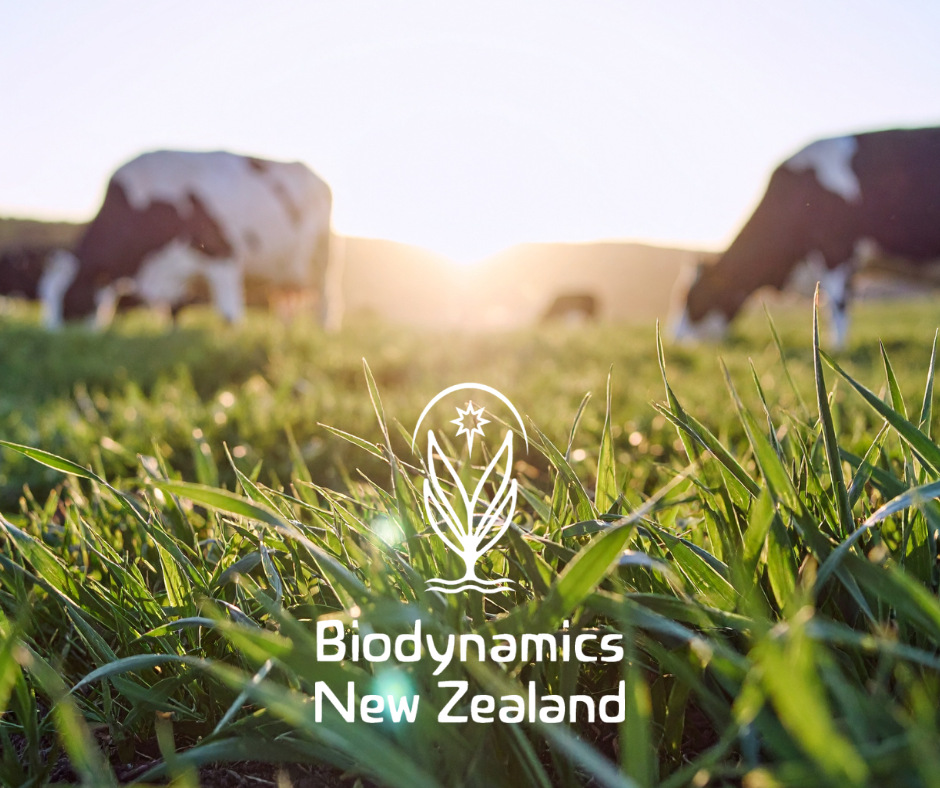
https://biodynamic.org.nz/wp-content/uploads/2026/08/Blue-Pink-Green-Vibrant-Event-Announcement-Facebook-Post.png 788 940 Biodynamic https://biodynamic.org.nz/wp-content/uploads/2022/02/logo-for-web2022-colour2.png Biodynamic2026-08-20 16:23:492026-08-20 16:26:03Nitrate Loading of Canterbury Aquifers – is there a biodynamic solution?

MEDIA STATEMENT: BIODYNAMICS NZ SUPPORTS OANZ IN APPEAL TO PARLIAMENT AGAINST GENE TECH BILL

28 October 2025/in Featured, Latest News, Sustainability + Climate

Biodynamics New Zealand protests Highly Contentious Gene Tech Bill

New Zealand, October 2025 – The Biodynamic Association of New Zealand (BDNZ) supports Organics Aotearoa New Zealand (OANZ) in their efforts to disseminate information on the highly contentious Gene Tech Bill; following the profoundly disappointing news that the Government plans to move forward with passing the bill despite the overwhelming public opposition.

BDNZ promotes biodynamic methods to safeguard agricultural, horticultural, farming and animal husbandry in New Zealand; by offering practices that regenerate soils and keep our farmers connected to the land through holistic management practices.

Research has shown time again the highly nutritious value of organic and especially biodynamically produced food is greatly superior; not to mention the softer environmental impact of this more holistic and natural farming method. BDNZ submitted to oppose the Gene Tech bill, seeing the real threats of losing our GE free status to such important export markets as the UK and EU which hold NZ’s organic sector in such high regard.

The proposed amendment to the Bill jeopardises the integrity of our country’s food system; by making New Zealand one of the most deregulated countries in the world for genetic engineering (GE)/genetically modified organisms (GMOs). With a clear lack of success with GE crops and farmed animals anywhere in the world over the past 20 years or more, it is evident that the best path forward for us to continue farming our food more in harmony with and working with the cycles of nature.

After months of hearings and nearly 15,000 public submissions in which 97% opposed the Bill — the Committee has recommended that it be passed, with only minor amendments. Most alarmingly, many MPs, farmers and public are unaware of the full implications of this proposed regime, posing a serious challenge as this new bill could significantly damage our agricultural landscape.

Furthermore, despite overwhelming public opposition, along with serious, legitimate concerns raised by scientists, farmers and consumers, the government continues to push the proposed Bill that will turn New Zealand into a mecca for unethical and unregulated genetic modification practices.

“We stand with OANZ and the wider organics community in protest against this Bill, which threatens not only New Zealand’s food Sovereignty, but also our internationally recognised status as producers of high quality sustainable and organic products”, said BDNZ Council Chair, Bridget Henderson. “We’re also incredibly grateful for the tireless energy and ongoing efforts that OANZ has put into opposing this bill on behalf of the extended organic community in Aotearoa”.

The Government is prioritising an update to a Bill in favour of scientific development that could make New Zealand farms more productive; while in fact contradicting themselves by removing appropriate protections for the environment including the right of food producers to be free from novel genetic contamination.

BDNZ’s Key Concerns with the Gene Tech Bill include:

  • The proposed legislation does not require decision-makers to take a precautionary approach
  • There is no protection for farmers wishing to maintain GE-free status
  • Proposed legislation does not require the consideration of ethics in the use of gene technology
  • The Bill could eliminate clear labelling, denying consumers right to choose GE-Free products by removing traceability of gene-edited product
  • The legislation removes the right of local councils for their areas to remain GE-free

The proposed amendments, overall, threaten New Zealand’s 100% proposition to the world. It is impossible to practice coexistence between GE and non-GE systems; and the lack of regulation proposed in the Gene Tech Bill will result in loss of integrity and biosecurity that we work so hard to maintain in New Zealand.

BDNZ agrees that the Bill requires a significant update, but calls on the National Party and its coalition partners to seek additional public consultation prior to advancing with the proposed amendments. BDNZ encourages members of the association and invested individuals to contact their local MPs. A detailed guide can be found at www.oanz.org/gefree-future-activation-toolkit.

About Biodynamics Association of New Zealand: The Bio Dynamic Farming and Gardening Association in New Zealand (Inc) was formed in 1939 to promote biodynamic methods. Our objectives are to foster, guide and safeguard in New Zealand the biodynamic approach to agriculture, horticulture, forestry and animal husbandry initiated by Rudolf Steiner in 1924 and practised progressively since. Membership is open to anyone interested in growing or farming biodynamically. Our membership currently includes farmers, viticulturalists, processors, orchardists, commercial and home gardeners.

Media Contact:

Jayne Craig

marketing@biodynamics.org.nz

Please head to Organics Aotearoa New Zealand to find letter writing templates, information and resources and to download the helpful Activation Toolkit

Kind regards, the council of Biodynamics New Zealand

https://biodynamic.org.nz/wp-content/uploads/2025/10/White-and-Blue-Modern-Pop-Call-to-Action-Instagram-Post.jpg 1080 1080 Biodynamic https://biodynamic.org.nz/wp-content/uploads/2022/02/logo-for-web2022-colour2.png Biodynamic2025-10-28 09:52:472025-10-28 09:52:49MEDIA STATEMENT: BIODYNAMICS NZ SUPPORTS OANZ IN APPEAL TO PARLIAMENT AGAINST GENE TECH BILL

We Need Your Help!

31 January 2025/in Featured, Latest News, Sustainability + Climate

The future of organics and biodynamics within New Zealand is currently facing a HUGE challenge to its future, in the form of The Gene Technology Bill.

This bill was drafted to facilitate the development of a global GMO sector in New Zealand and was presented to parliament in December.

If passed New Zealand will become the most deregulated and permissive country in the world with regard to the environmental release of novel, genetically modified organisms and the use gene-editing applications in our food production systems. If passed our ability produce and market natural, unmodified foods will be critically impacted.  

Key aspects of the Bill include:   

Deregulation to facilitate full development and release of genetically modified organisms and applications in our natural and productive environments

Removal of the ability for communities or regions to declare themselves “GE Free Zones”

Redefinition of legal terms to effectively remove labelling and traceability of GMO’s within our production and food systems

Removal of the precautionary principle from legal and regulatory considerations 

This is a huge concern to the future of organics and biodynamics here in New Zealand, so we are calling on our community to come together to protect our future, by taking action to stop the Gene Tech Bill.

Our friends at Organics Aotearoa New Zealand have compiled a fantastic GE Free Activation Tool Kit to help you make your submission, organise your local community and to spread the word.

They also have a donation fund which you can contribute to. The money raised goes towards helping support fund a national campaign raising awareness about the risks of GE policy changes.

Any action you can take, large or small, will help make a difference to keeping our future GE Free!

https://biodynamic.org.nz/wp-content/uploads/2025/01/Screen-Shot-2025-01-31-at-12.24.25-PM.png 1355 1343 Biodynamic https://biodynamic.org.nz/wp-content/uploads/2022/02/logo-for-web2022-colour2.png Biodynamic2025-01-31 12:48:152025-01-31 12:53:11We Need Your Help!

Organic & Biodynamic Winegrowing Conference 2015

27 July 2015/in Past Events, Wine

The inaugural Organic and Biodynamic Winegrowing Conference was held in Blenheim over 8-10 July and by all accounts was a huge success. Su Hoskin shares her impressions.

Read more

https://biodynamic.org.nz/wp-content/uploads/2015/07/Philippe-cropped.jpg 1344 2448 admin https://biodynamic.org.nz/wp-content/uploads/2022/02/logo-for-web2022-colour2.png admin2015-07-27 17:25:172022-03-21 10:47:41Organic & Biodynamic Winegrowing Conference 2015

Article Categories

  • Animals
  • Bees
  • Beginning Biodynamics
  • Biodynamic Case Studies
  • Biodynamic Preparations
  • Biodynamics for children
  • Biodynamics in Schools
  • Compost
  • Cosmic Influences
  • Cows + Ethical Calf Raising
  • CPP
  • Events
  • Farm as an Organism
  • Featured
  • Growing Food
  • Harvest Magazine Article
  • Hua Parakore
  • Latest News
  • Nutrition + Food
  • Past Events
  • Pest Management
  • Prep500
  • Seasons
  • Steiner School
  • Stirring + Water + Flowform
  • Sustainability + Climate
  • Wine

Recent Articles

  • Nitrate Loading of Canterbury Aquifers – is there a biodynamic solution?20 August 2026 - 4:23 pm
  • Biodynamics New Zealand Media Release27 May 2026 - 2:37 pm
  • Praise for Equisetum (Preparation 508)11 May 2026 - 12:20 pm
  • New Seeds: Growing the Future of Biodynamics5 February 2026 - 10:56 am
  • Caring for the Land, Together – A Gentle Overview of Sustainable and Regenerative Farming Approaches in Aotearoa New Zealand 20 January 2026 - 10:30 am

Join our newsletter!

Post Categories

  • Animals
  • Bees
  • Beginning Biodynamics
  • Biodynamic Case Studies
  • Biodynamic Preparations
  • Biodynamics for children
  • Biodynamics in Schools
  • Compost
  • Cosmic Influences
  • Cows + Ethical Calf Raising
  • CPP
  • Events
  • Farm as an Organism
  • Featured
  • Growing Food
  • Harvest Magazine Article
  • Hua Parakore
  • Latest News
  • Nutrition + Food
  • Past Events
  • Pest Management
  • Prep500
  • Seasons
  • Steiner School
  • Stirring + Water + Flowform
  • Sustainability + Climate
  • Wine

Login Status

Forgot? 

Join our newsletter!

Contact Details

Bio Dynamic Farming and Gardening Association
E-mail:

Social Media

Follow us on Instagram

Follow us on Facebook

© 2022, All Rights Reserved Biodynamic Farming and Gardening Association in NZ Inc | Website design by Saucy Hot Design
  • Link to Facebook
  • Link to Instagram
Scroll to top Scroll to top Scroll to top